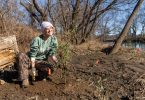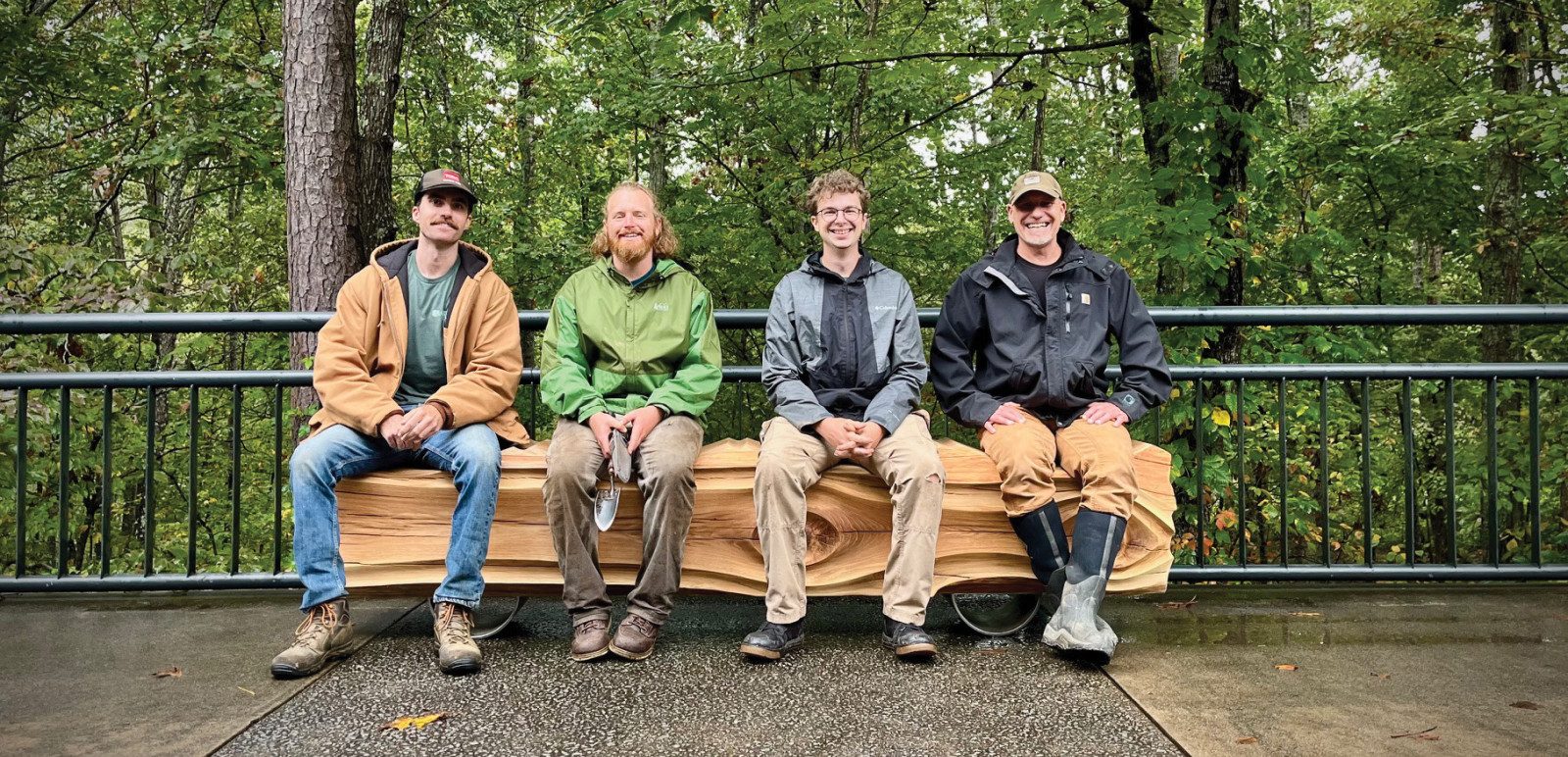
NC Arboretum staff enjoy a first sit on a bench by artist Chester Shuey
By Emma Castleberry
Hurricane Helene was responsible for unprecedented forest loss across our region. These forests are a vital part of Western North Carolina’s economy, ecology and identity. A new non-profit organization, Echoes of the Forest, seeks to transform this loss into something positive through public art installations known as Echoes, which are created by local artists using felled trees. Founder Liisa Andreassen launched Echoes of the Forest in 2025 with the help of local marketing company Marketing Outpost.
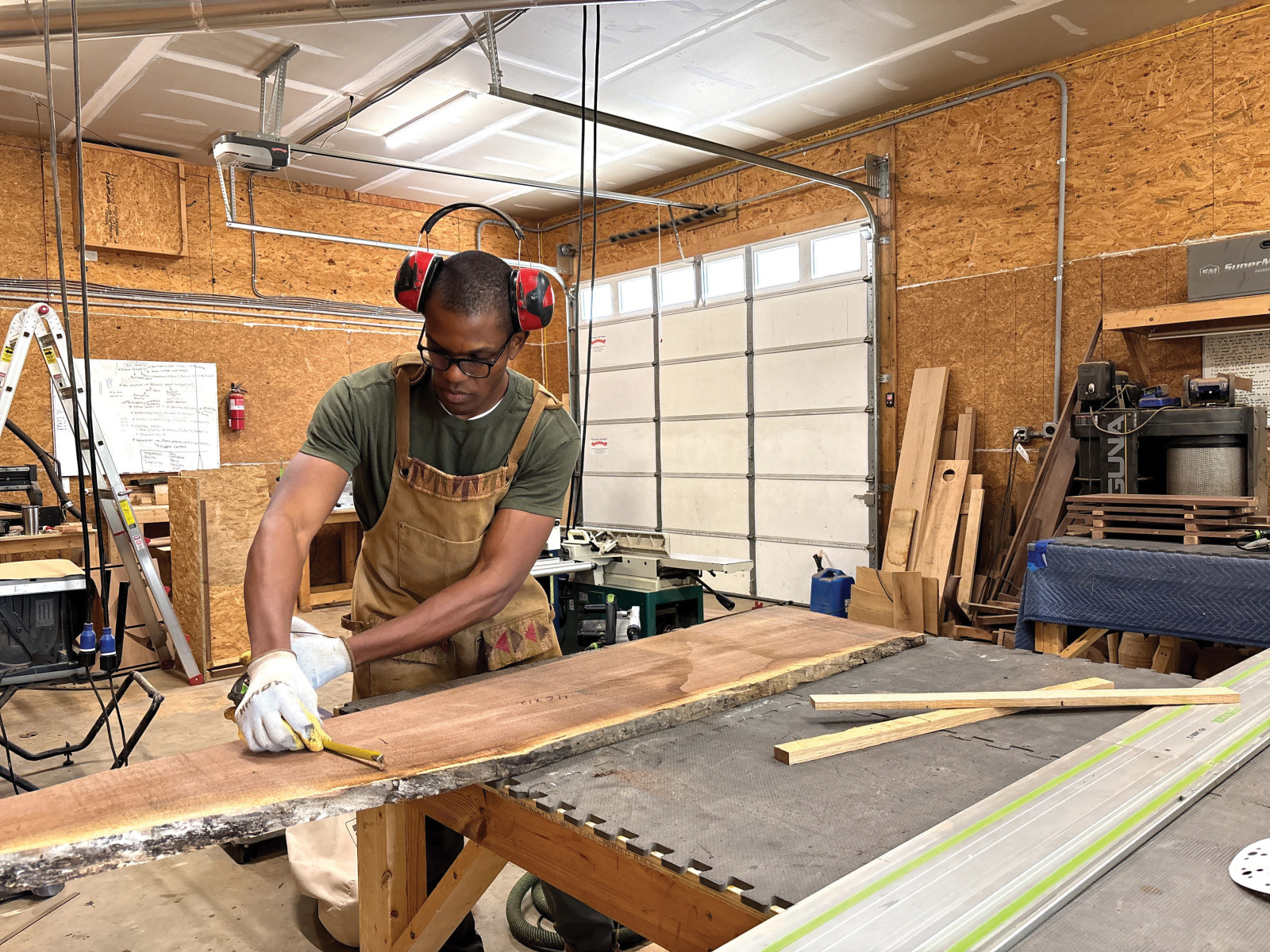
Kwadwo Som-Pimpong planing the salvaged walnut wood for the Biltmore Town Hall project
Echoes of the Forest has completed several commissions, including three permanent installations at the North Carolina Arboretum, a bench in the River Arts District, a mantelpiece for the Biltmore Forest Town Hall and a bear statue at Cane Creek Soccer Fields, funded by Buncombe County Parks & Recreation to recognize the site’s critical role in Helene recovery.
“During the storm response, the fields served as a major debris management site, temporarily shifting from recreation to essential infrastructure,” says Allison Dains, parks and recreation director for the county. “As the fields were restored, the County partnered with a local artist through Echoes to repurpose storm-felled trees into a permanent installation, transforming materials from the disaster into a symbol of renewal.”
The piece, called Soccer Cub, was crafted by Mike Ayers of Mountain Mike’s Whetstone Woodworks. “Working with Echoes was a highly collaborative and rewarding experience,” says Dains. “Their team brings a thoughtful, community-centered approach to their work, taking time to understand the history and significance of the site while incorporating local input into the creative process.”
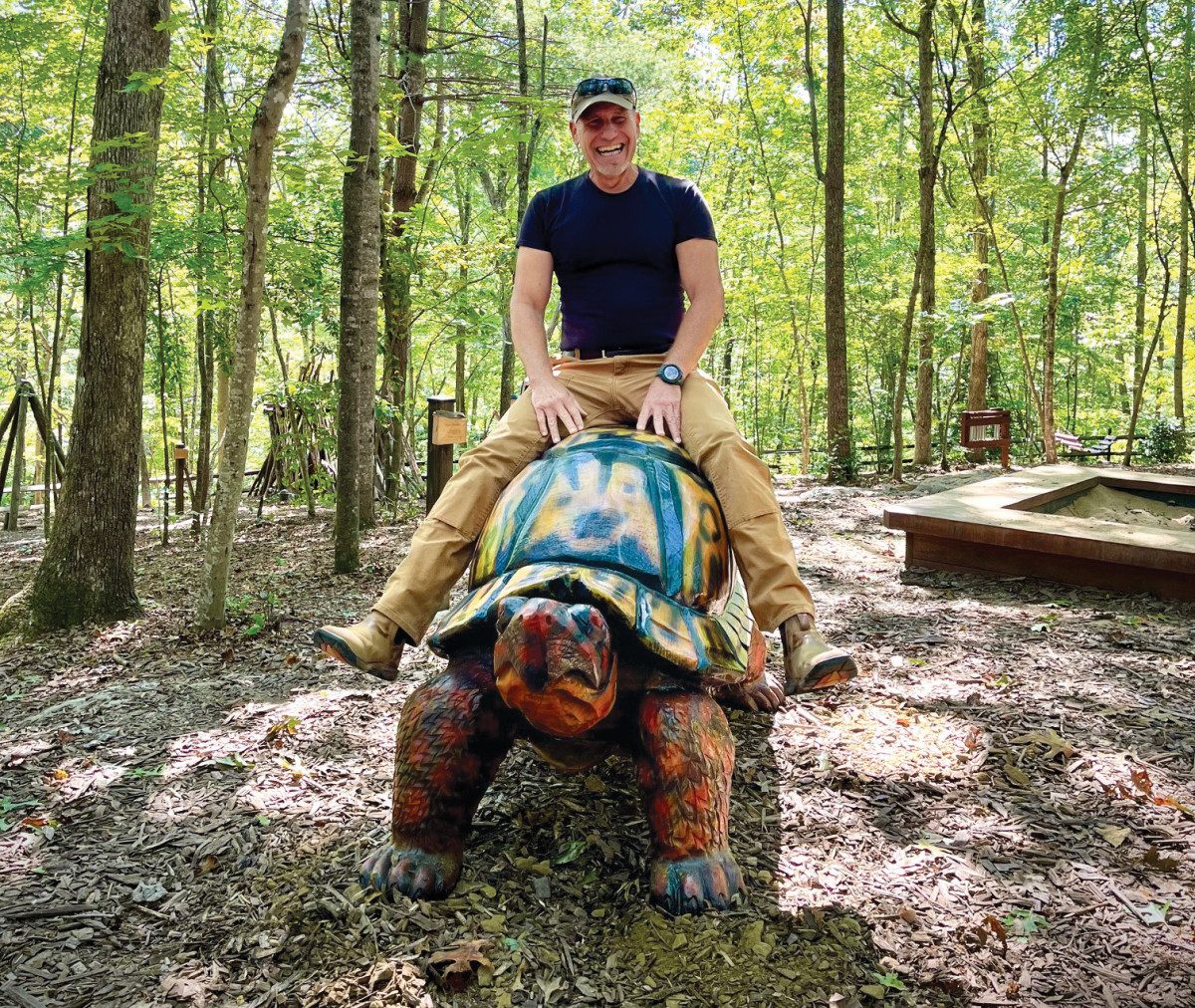
Mac Franklin, director of Horticulture at the NC Arboretum, takes a ride on Shelley the Box Turtle
Andreassen acts as matchmaker between commissions and artists. “I have learned about the artists’ different styles and what they are most comfortable working with, such as indoors or outdoors and what type of wood,” says Andreassen. “Once I get a commission, I discuss the project with the artist I think is the best fit, and then they draw up a sketch and we decide on a budget.”
Andreassen selected artist Kwadwo Som-Pimpong for the Biltmore Forest Town Hall mantelpiece commission. “His elegant approach to design was a perfect match for this project,” she says.
Som-Pimpong has been woodworking since 2015, and most of his career has been spent working with dried lumber. “Dried lumber is stable and more predictable,” he says. “Working with fallen trees is different in that the wood is still full of moisture and as it dries, it can move in very unpredictable ways. The expectation of wood movement has to be factored into the design. This presents a great challenge, and yet the joy of surprises. This work helps the community to see how beauty can rise out of destruction and adversity.”
There is a GPS map locator on the nonprofit’s website that lists the location of each Echo as they are installed and unveiled. “By honoring what was lost while creating something enduring, it invites us all to reconsider how we respond to environmental challenges: not with resignation, but with creativity, collaboration and care,” says Andreassen.
Learn more at EchoesoftheForest.org.