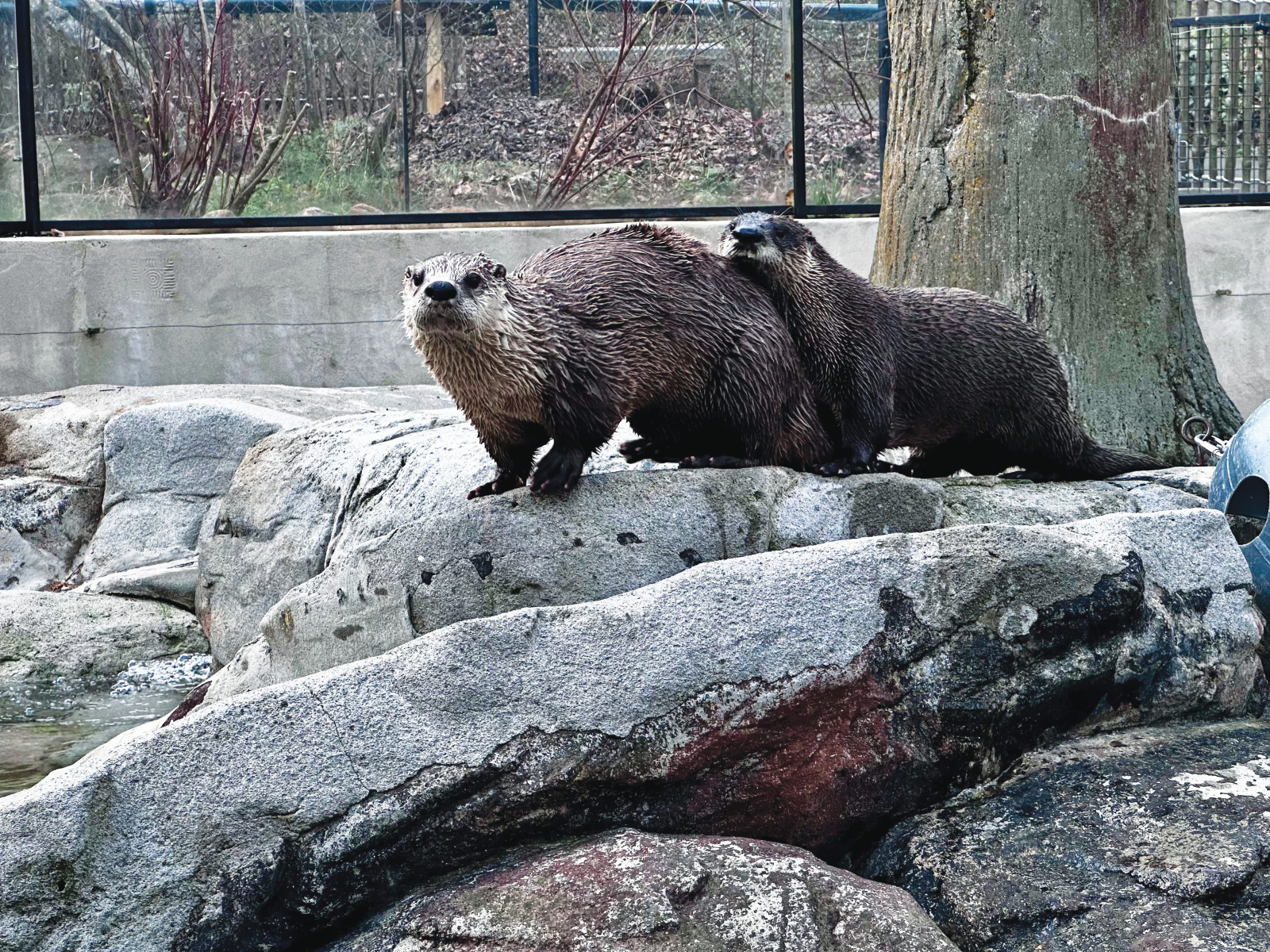
Obi-Wan and Anakin, resident river otters at WNC Nature Center. Photo by Marilynne Herbert.
By Paula Musto
Graceful, playful and always curious, the American river otter is a crowd pleaser at zoos and nature centers. But this semi-aquatic species also represents one of our region’s most successful conservation comeback stories.
River otters, once widely distributed throughout the US and Canada, steadily declined in the early days of our nation due to overtrapping. Otter pelts, dense and waterproof, were highly prized in the fur trade for coats and hats. Over the last century, wetland drainage and water pollution also took a toll, and by the mid-1900s, river otters had become virtually extinct in Western North Carolina, though populations in NC coastal areas managed to survive.
To restore otters in our region, the North Carolina Wildlife Resources Commission undertook a project in the late 1900s that released river otters from the coast into local rivers and the Great Smoky Mountain National Park where the animals would breed. Today, otter populations are abundant throughout the state.
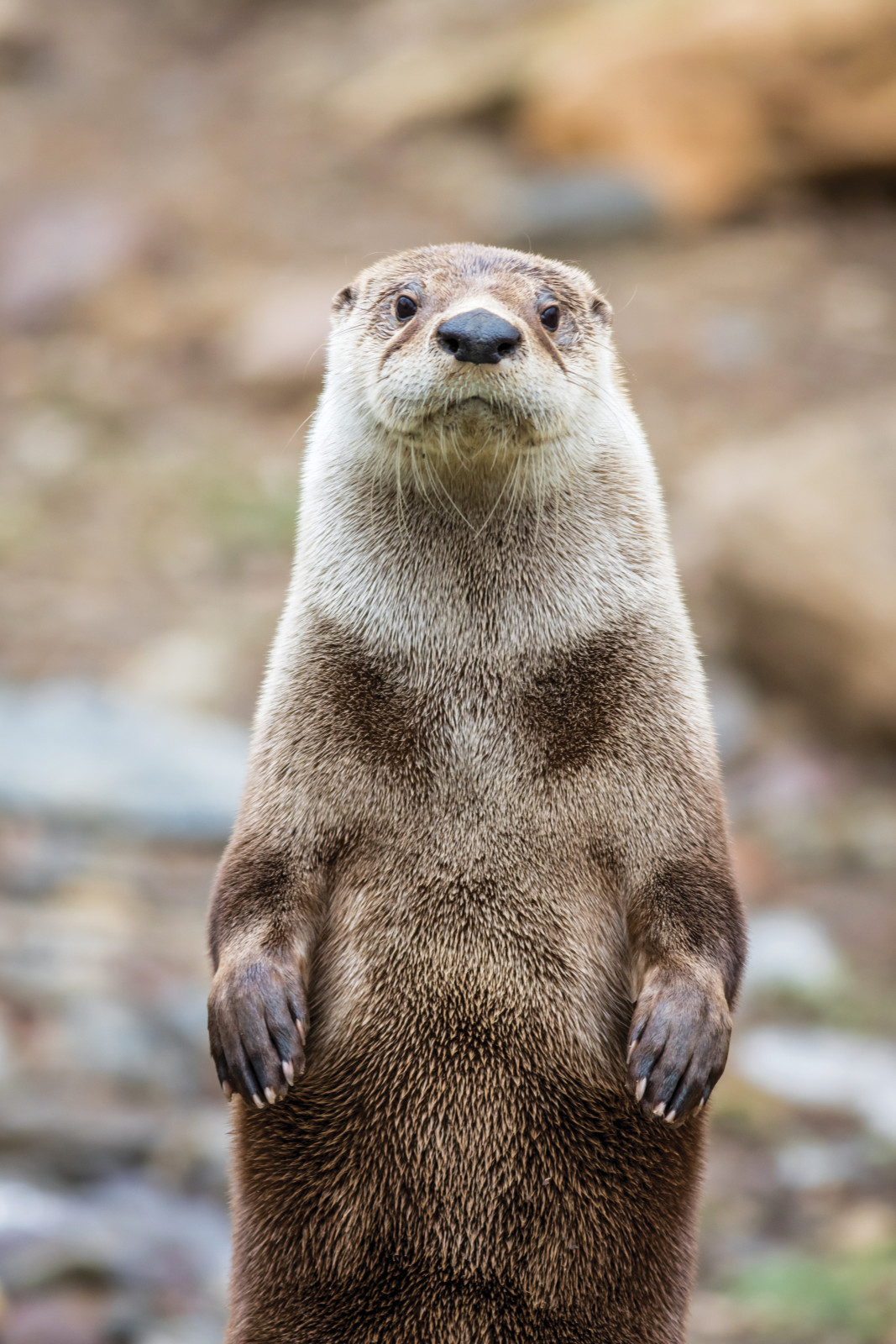 Yet, these cautious animals are hard to spot in the wild. They tend to avoid humans and quickly slip underwater or slide behind rocks and vegetation when approached. Their rich, brown fur blends into their watery environment as they roam long stretches of rivers and streams—it takes a keen eye and patience to spot the fast-moving creatures.
But visitors to the Western North Carolina Nature Center can enjoy the animals as they zip through watery habitats and romp among rocks and vegetation. The center is home to two males, Obi-Wan and Anakin, names familiar to Star Wars fans. In the wild, male otters often live in bachelor groups, and these two are well settled into their daily routine of endless play and frolicking.
“They are highly intelligent animals and excellent swimmers,” says Erin Oldread, the Nature Center’s animal curator. “They are among our guests’ favorites. Kids absolutely love them.”
I found the swift-moving creatures tough to photograph, but thoroughly enjoyed watching them wrestling, belly flopping and somersaulting through the water in their glass-enclosed habitat, and slipping and sliding on a rocky outdoor terrain. It’s a comic scene as they glide on their bellies with their front paws tucked by their sides.
River otters, along with weasels and minks, belong to the Mustelidae family. Characterized by an elongated, sleek body with short, sturdy legs, they have impressively thick, long tails that act like a rudder to facilitate propulsion through the water.
Here are some environmentally significant things to know about these charismatic animals.
• River otters are important predators in their aquatic environments. They help maintain balanced fish and amphibian populations by reducing undesirable species that compete for food with cold-water game fish. A stable otter population means the food web below them is healthy and balanced.
• Otters rely on clean water—unpolluted rivers, lakes and wetlands. They do not thrive in contaminated water, thereby making the animals a strong indicator of water quality. If otters begin disappearing in their historic range, it can signal broader environmental problems.
• NC’s otter restoration project also benefited another species once nearly extinct in our region—wild turkeys. Some of the river otters captured in eastern NC for restoration purposes were given to West Virginia where otter populations had also declined. In exchange for 21 river otters, West Virginians gave WNC 36 wild turkeys to help repopulate the species here. The otter-turkey swap was deemed successful, a collaborative approach to wildlife conservation.
Today, river otters are a highly valued addition to our region’s waterways. Sighting one can be an exciting occasion for outdoor enthusiasts. One of the best spots to view them in the Asheville area is at Bent Creek River Park, early in the morning. Other spots include the quiet coves adjacent to Beaver Lake Bird Sanctuary and along streams and creeks inside Pisgah National Forest.
But if you are unable to catch a glimpse of these beautiful but elusive animals in the wild, check out Obi-Wan and Anakin at the WNC Nature Center. They will put on quite a show for you!
Paula Musto is a writer and volunteer for Appalachian Wildlife Refuge. To learn more about river otters and other wildlife in Western North Carolina, visit WildWNC.org.