Increase Your Environmental Literacy While Traveling
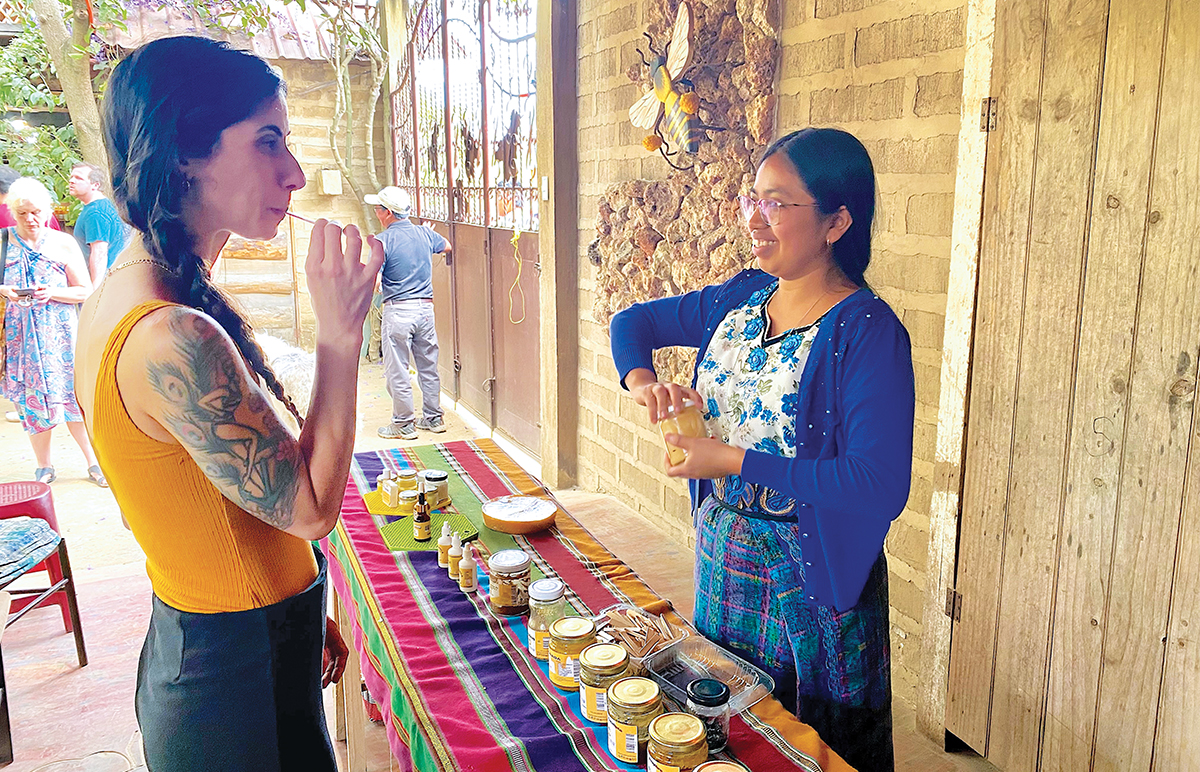
Sampling honey at Xunah Kaab’ Honey Farm, Guatemala. Photo by Paula Musto
By Paula Musto
Get your suitcases ready and your travel maps handy. World Tourism Day, celebrated every September 27, is a good time to give thought to where you might be headed in coming months. Chances are you’re going somewhere—a pent-up demand due to the easing of pandemic-related worries is making 2023 a record year for travel worldwide.
Often called wildlife tourism, eco-tourism or green tourism, travel with increased sensitivity to sustainability and environmental concerns is a fast-growing trend. Whether doing it independently or as part of an organized group, travelers can find a wide variety of destinations and activities to increase their environmental literacy while on the road.

Paula Musto at Thingvellir National Park, Bláskógabyggð, Iceland
I found this to be true on several trips this year—for both work and pleasure—when itinerary options almost always included activities to help travelers better understand conservation efforts and sustainability issues in the areas we were visiting.
At a writing retreat in Guatemala, leisure time options included climbing a nearby volcano to view native flora and fauna, visiting a Mayan textile cooperative where Indigenous women weave natural-dyed products and touring an organic honey farm devoted to the conservation of native stingless bees.
“As visitors, it’s important that we honor the local culture and environment,” says author Joyce Maynard who hosts several writing groups each year in a remote area of Guatemala. She encourages guests to explore the nearby Mayan villages and shop for crafts made by village women. “We need to be an ally to the local beauty and sustainability,” Maynard says.
When on a trip to the Alsace region of France this spring, I eagerly looked forward to wine tours to sample the region’s outstanding vintages. Several outings emphasized organic viticulture, whereby winegrowers eschew chemicals in favor of natural solutions to fertilize vineyard soil. While enjoying the excellent Alsatian wines, we learned how growers have made sustainability an important component of winemaking.
Iceland, with its delicate ecosystems and unblemished natural habitats, has long been one of the leading ecotourism destinations in the world. Tour guides proudly explain how Icelanders pioneered the use of geothermal power for electricity and heating—the nation now meets almost all of its energy needs from renewable resources. Visitors are often surprised to learn that the Blue Lagoon—Reykjavik’s most famous, must-see attraction, revered for its warm, sky-blue waters—is fed by runoff from the geothermal power plant next door. A journey around the island to view icebergs comes with a stern warning: glaciers are melting, losing a staggering 11 billion tons of ice each year. Even skeptics return with a heightened concern for rapidly accelerating climate change.
“More and more people are recognizing the environmental challenges that impact our lives,” says Savannah Trantham, a certified wildlife rehabilitator and the executive director of Appalachian Wildlife Refuge, who took time from her Florida beach vacation this year to explore the Everglades and its protected wildlife. “It’s our responsibility to learn as much as possible when we travel and then share it with others when we get home,” she says.
World Tourism Day is the result of work done by the United Nations’ World Tourism Organization, an international effort to promote sustainable tourism worldwide. This year’s theme asks travelers to search out ecology-friendly experiences and support sustainability initiatives. Consider:
Taking the road less traveled. Rather than compete with hordes of tourists at the Eiffel Tower, check out less crowded destinations. Other cities in France—Lyon and Strasbourg, to name two—are less crowded than Paris and not as shockingly expensive. Thanks to cruise ships and day-trippers, Venice is almost always over capacity, but you can go across the border to less visited and highly scenic Slovenia instead.
The Canadian Rockies are spectacular, but rather than jam-packed Banff consider less-known Yoho National Park where you won’t bump into busloads of tourists.
Investing your dollars. Buying as many locally made products as possible supports area businesses and entrepreneurs. As a bonus, you can go home with unique souvenirs. In Guatemala, I purchased a huipil, a poncho like-tunic worn by native women, and jars of Melipona honey, used as a medicinal by Mayans for millennia—it’s great on insect bites here.
Slowing down the pace. Eschew cars and buses and opt for a walking tour or biking expedition. Recently, a group from Asheville visited France’s famed Norman villages by foot, walking from town to town. They missed much of the summertime traffic and learned about native plants and foods along the route.
In Western North Carolina we are fortunate to have a wealth of eco-friendly travel opportunities nearby. For those interested in learning more about local agriculture and livestock, ASAP’s annual Farm Tour will take place September 23-24 on working farms located within an hour’s drive of Asheville. This month, visitors to Grandfather Mountain can grab a front-row seat to one of nature’s most spectacular shows, the Hawk Watch. Mountain naturalists will be on hand as guides as thousands of raptors migrate south over the mountains. It is also an excellent time for a drive through Cataloochee Valley in the Great Smoky Mountains National Park to view the elk herds. Fall breeding season is from September to early November.
For more close-to-home, outdoor and eco-friendly travel ideas, visit ExploreAsheville.com. Happy travels!
Paula Musto is a writer and volunteer for Appalachian Wildlife Refuge, a nonprofit whose mission is to help injured or orphaned wildlife, support WNC’s wildlife rehabilitation network and provide wildlife conservation education. To help save wildlife, donate and learn more, visit AppalachianWild.org.