
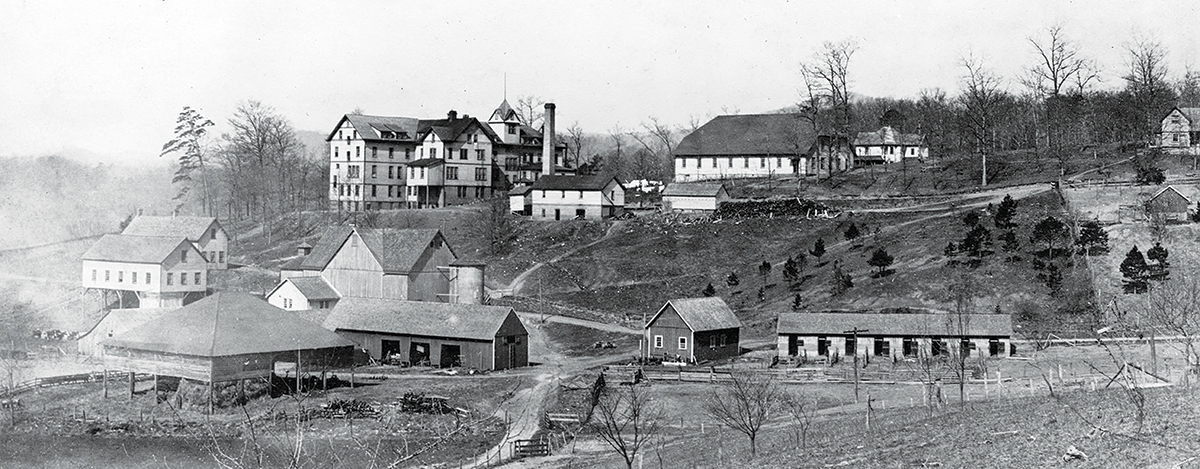
Asheville Farm School. Photos courtesy of Warren Wilson College
By Lauren Stepp
Bill Smith awoke to a bugle call at 6 a.m. The sky over Swannanoa was still inky black, and the wind whipped cold. But Smith knew if he didn’t work the fields, he wouldn’t eat. That’s just how it went at the Asheville Farm School for Boys.
Founded in 1894 on 420 acres of fertile soil, the school was an attempt by the Women’s Board of Home Missions of the Presbyterian Church to educate boys living in the hills and hollers of Western North Carolina.
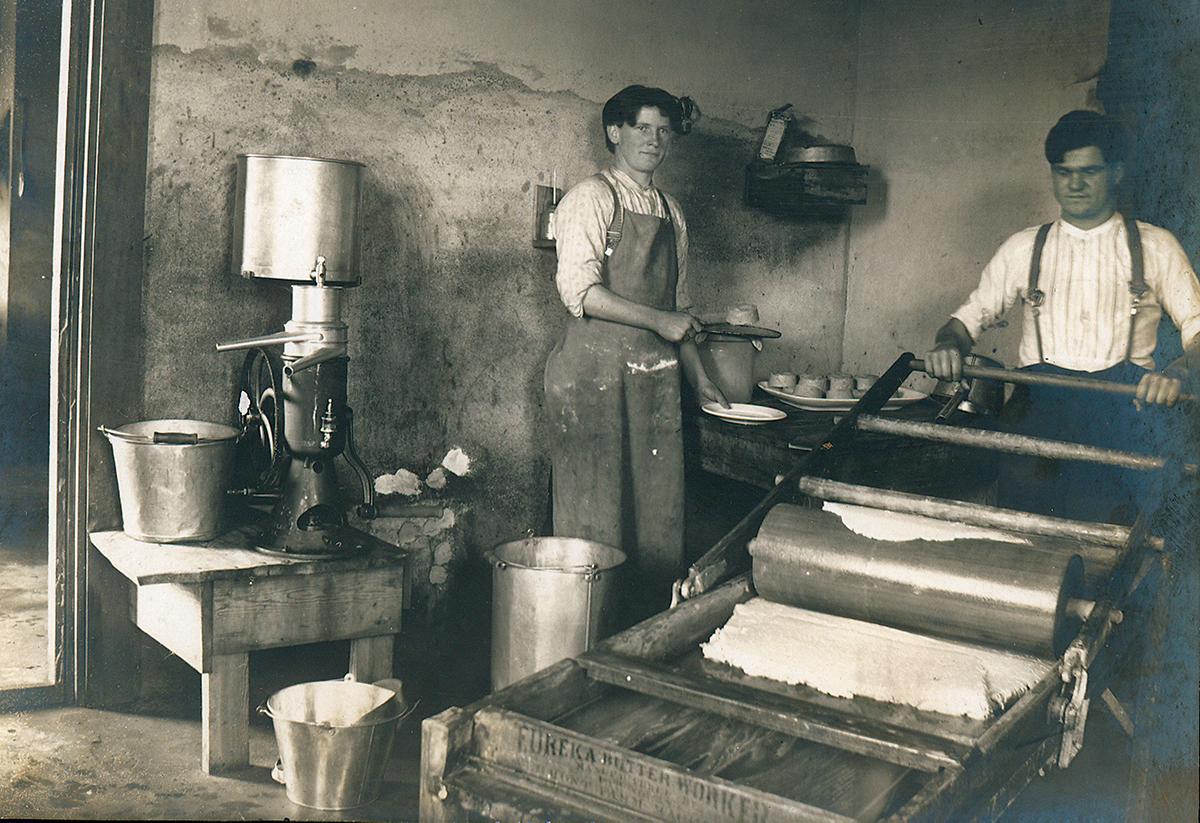
Asheville Farm School dairy
According to Jeffrey Keith, a professor of global studies and history at Warren Wilson College (WWC), there was a “great deal” of missionary activity happening across Southern Appalachia in the late 19th century. These missionaries “felt a drive to focus their efforts on underserved communities,” especially the “poor mountain boys” who lacked access to a basic education.
However, students at the Farm School learned much more than reading and arithmetic. They were also expected to learn about baling hale, rotating crops, milking cows, gutting hogs and washing laundry. In 1910, students even dammed Bull Creek to supply electricity to campus.
Needless to say, pragmatism reigned supreme. That much is evidenced by Smith’s daily schedule, which was documented in Kay Little Stockdale’s dissertation, Elizabeth B. Williams: Portrait of a Rural Missionary Educator.
Though the text primarily focuses on the life of Elizabeth Williams, an educator who arrived at the school in 1895, it also offers insight into student life.
Smith, for instance, awoke to reveille at 6 a.m., ate breakfast at 7 a.m. and then spent much of the day working or attending lessons with a break for chapel and lunch at noon. In the afternoon, he may have practiced with the marching band or perfected his fastball with the baseball team. Then came supper, study hall and lights out at 9:30 p.m. This schedule likely shifted over the decades, especially as the Farm School evolved.
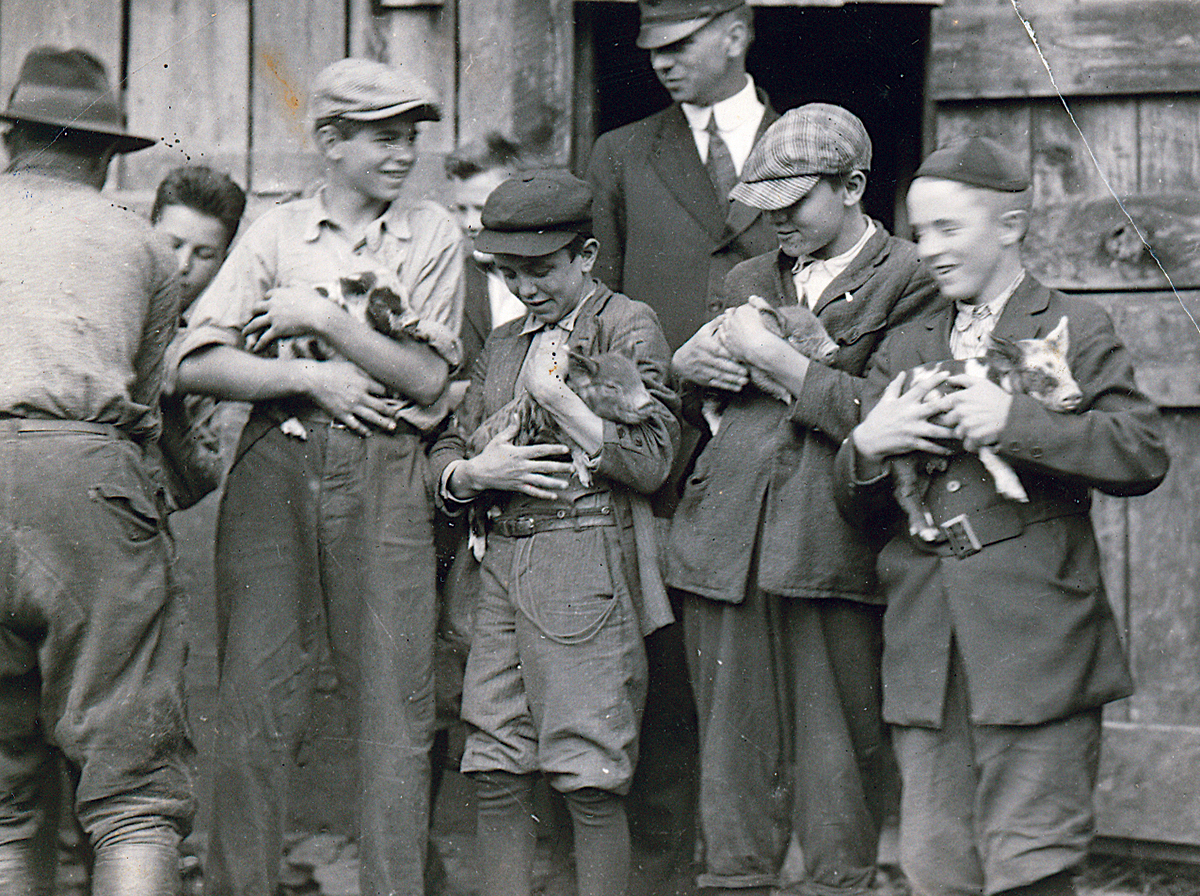
Asheville Farm School students hold piglets, circa 1908.
In 1942, for instance, the Farm School merged with the Asheville Normal and Teachers College, the Dorland-Bell School and the Mossop Memorial School to become the co-educational Warren H. Wilson Vocational Junior College and Associated Schools. The junior college operated until 1966 when it was reinvented as a four-year institution.
Today, WWC looks a lot different than it did in 1894. Rather than serve 25 teenage boys from Southern Appalachia, the college educates more than 800 students from around the world. These students major in everything from Science Communication to Printmaking. WWC also offers a low-residency graduate program for writers.
Despite these massive changes, the Asheville Farm School left an indelible impression that will never be forgotten, says Keith.
“Warren Wilson College is a living legacy of the Asheville Farm School,” he says. “The college’s unique approach to education through work, service and academics is a direct outgrowth of the Farm School’s origins and development.”
Warren Wilson College is located at 701 Warren Wilson Road, Swannanoa. To learn more, visit Warren-Wilson.edu.





Great article! I enjoyed learning more about the history of Warren Wilson College.