

Photo by Paula Musto
By Paula Musto
One of the best things about living in Western North Carolina is the wealth of wildlife that surrounds us—something that can foster a powerful curiosity about all species, including those animals we most commonly see in zoos like lions, elephants, rhinos, zebras, leopards and hippos.
Thus, the dream vacation: an African safari. Earlier this year, thanks to a family connection, I had the opportunity to travel to game reserves in South Africa. Not surprisingly, I discovered that observing these large mammals in their natural habitats is vastly different from viewing them in captivity. The trip (dare I call it life-changing?) also provided valuable insight into the monumental challenges we face in the quest to save endangered creatures from extinction. It’s a sad fact that species that have roamed our planet for eons are close to disappearing forever.
Consider the rhinoceros. This is not an animal I had previously given much thought to—not a creature as endearing as an elephant nor as fanciful as a giraffe or zebra. With its unmistakable horn and tank-like appearance, these thick-skinned creatures appear as a throwback to prehistoric times. But after following rhinos for days, viewing their movement and habits, I found them among the most enchanting animals in the scruffy African bush.
Unfortunately, today they are among the most critically endangered animals on our planet, with some species now functionally extinct in parts of Africa. Their perilous status is largely due to poaching. Rhino horns, made of keratin, the same protein as human nails, are worth more than their weight in gold for supposed magical health benefits. Poachers, acting in a fashion similar to drug cartels, kill the increasingly rare animals and hack off their iconic horns, a prized commodity in Asian markets.

Photo by Paula Musto
The Madikwe Game Reserve, located near the South Africa-Botswana border, is home to both white and black rhinos. The reserve’s protected status and anti-poaching efforts have safeguarded rhino herds that roam its grasslands. I was privileged to join a conservation team as they set out to dart, chip and take blood and tissue samples from a white rhino. It was a massive effort—no easy task to put down a 2-ton animal—but the data provides invaluable information recorded by a national registry that tracks rhino births, health and movements in hopes of maintaining herds that might otherwise perish.
The most alarming part of the process is the number of heavily armed guards that accompany these outings. While the veterinarian team worked, the guards, equipped with high-powered rifles, kept a watchful eye on our surroundings located on an undisclosed site outside the reserve for security. Game rangers have been murdered in the poachers’ quest for rhino horns to feed the illegal wildlife trade.
Elephants are also a protected species in Africa. These colossal animals have been historically hunted for their ivory tusks, another commodity in the wildlife trade. At the Kapama Private Game Reserve, adjacent to the renowned Kruger National Park, we met an extraordinary herd of rescued elephants orphaned due to poaching, habitat loss and human-wildlife conflict. The herd’s story began in 1997 when a tiny calf was found abandoned and stuck in the mud. Rescuers named him Jabulani and the baby pachyderm thrived, cared for by humans. But as he grew, Jabulani became accustomed to caretakers and could no longer survive alone in the wild. Elephants are highly social animals who need a family. One was found for Jabulani when a herd of elephants in nearby Zimbabwe, earmarked to be put down due to turmoil in that country, were provided a sanctuary at the Kapama Reserve.
Jabulani was adopted into what is now known as the Jabulani herd. While these habituated elephants rely on human caretakers and cannot be fully returned to the wild, they live in a large, protected wilderness area and maintain natural behaviors. Guests at the nearby Jabulani Lodge can interact with these mighty tuskers who serve as ambassadors for wildlife conservation.
I traveled to Africa hoping to see the big mammals and was thrilled to encounter so many, including what’s been coined the Big Five—elephants, rhinos, lions, leopards and water buffalo. But it was the adorable African penguins that captured my heart. The birds, found on the coastline near the Cape of Good Hope, are classified as an endangered species and, like so many other wildlife species, their perilous decline is due to habitat destruction and human interference.
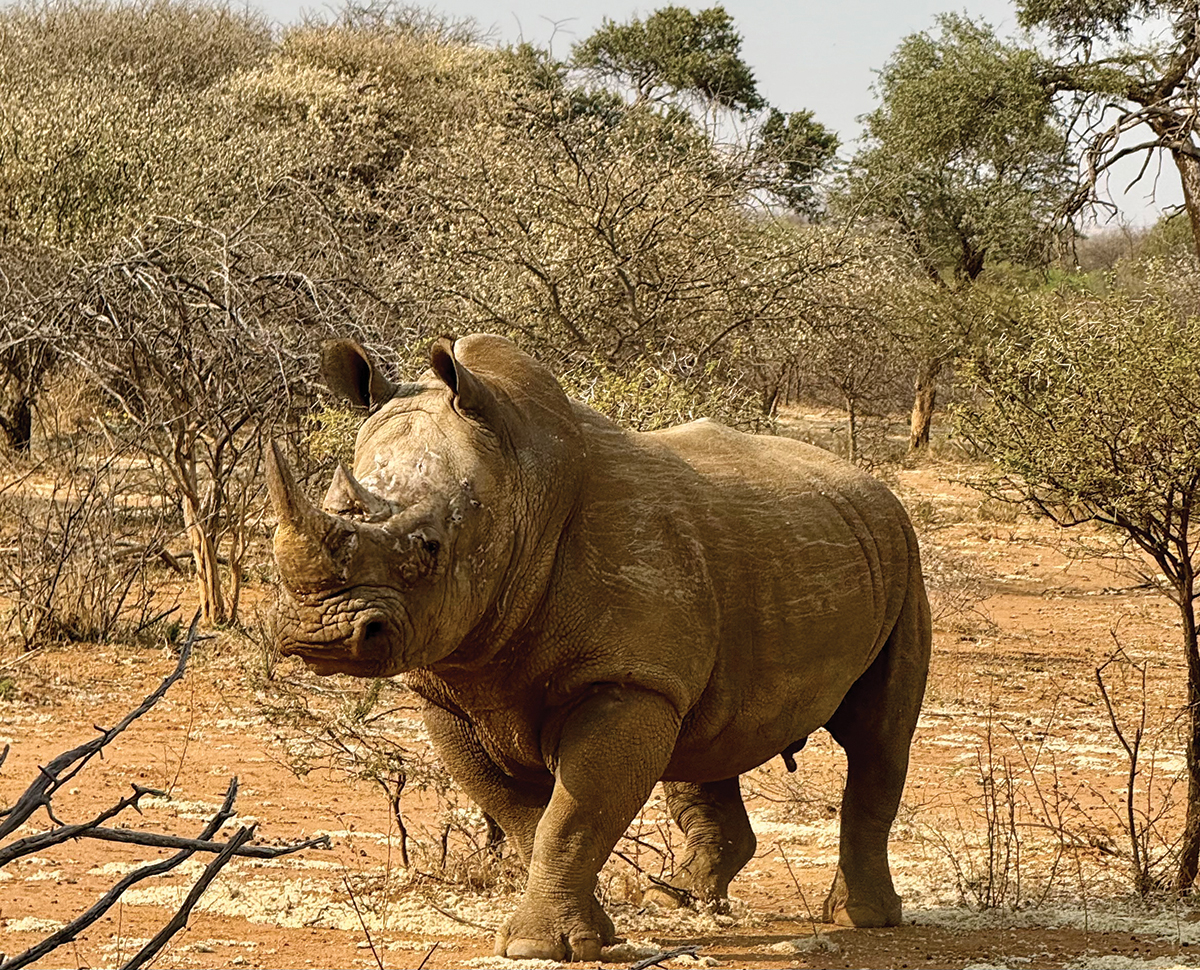
Photo by Paula Musto
The boardwalks at the Boulders Penguin Colony offer visitors the opportunity to view protected groups of the glossy, tuxedoed birds. These comical creatures proudly waddle along the sandy beach. Clumsy on land, they transform into graceful acrobats once in the water. It was baby season when we arrived, just in time to catch a glimpse of devoted moms hovering over their nesting chicks.
Experiencing a diverse array of wildlife in their natural habitats can only be described as a magical experience, sometimes in unexpected ways. There were predators and prey, a reminder of the cycle of life. We watched a leopard for three days as he fiercely guarded his impala prey from bands of prowling hyenas. Baboons pranced along the ridgelines, many mothers with babies riding backside. We heard the roar of lions and the thunderous trumpeting of elephants.
I was certain these creatures were communicating, though their messages remained a mystery known only to them. Each evening brought fiery sunsets that blazed across the seemingly endless bush. It’s impossible to walk away from such a journey without carrying a profound respect for the wild and a heart full of wonder.
Paula Musto is a writer and volunteer for Appalachian Wildlife Refuge which cares for injured and orphaned wildlife. Consider donating to support wildlife conservation efforts and to help protect WNC’s native species at AppalachianWild.com.




God bless you Paula for focussing your always evolving skills and talents to share and celebrate the rarest of creatures and features on this earth – and which have become mankind’s role to protect and preserve for all time. If we don’t, then who will?