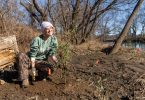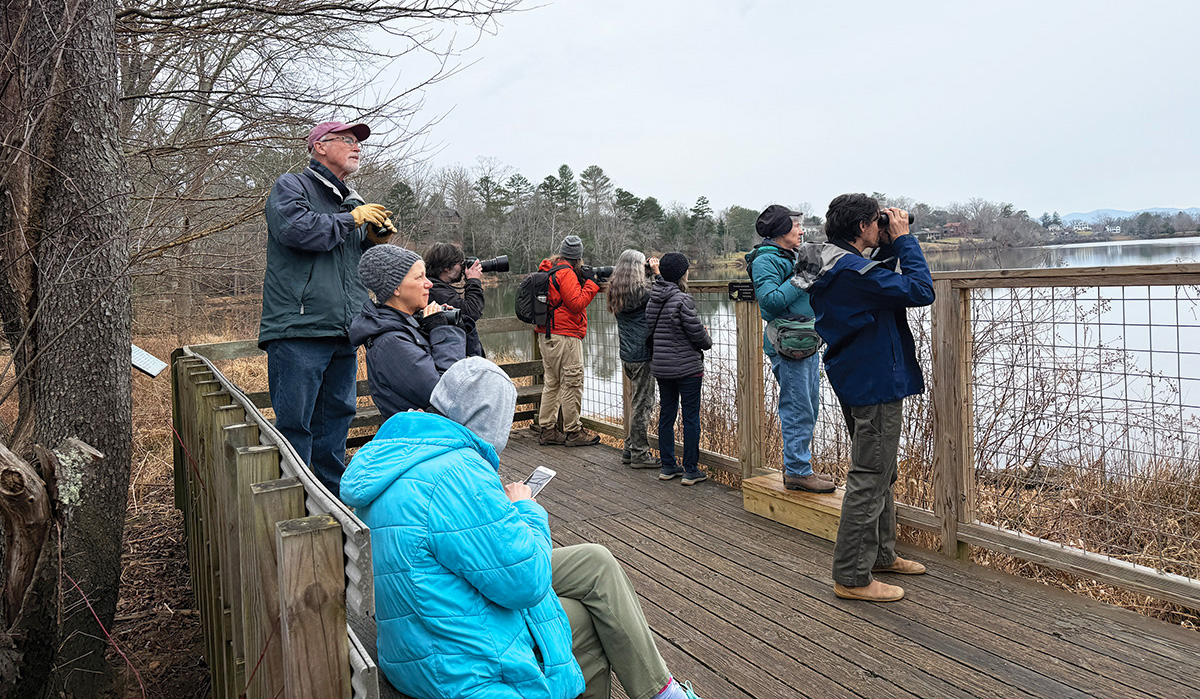
Beaver Lake Bird Sanctuary. Photo by Paula Musto
By Paula Musto
The sky is gray and the ground wet, but a dozen enthusiastic souls have shown up for the monthly bird walk at the Beaver Lake Bird Sanctuary. Binoculars in hand and toting cameras, the group sets out with high expectations. Maybe it will be the day to catch sight of a Belted Kingfisher, the blue-and-white-breasted bird known for its long, thick bill and unique hunting skills. Perhaps we’d see the creature plunge headfirst into the water to capture its prey. Maybe we’d hear its loud, clattering trill.
Whether you’re a seasoned birdwatcher (often called birders) or simply someone curious about the feathered creatures that share our outdoors, the Blue Ridge Chapter of the National Audubon Society offers an easy, fun way to learn about avian species. Certainly, you can read books and admire dazzling photos in National Geographic, but nothing compares to seeing birds in their natural habitat.
“It’s a wonderful way to spend time outside,” says Barbara Reynolds, who taught ornithology courses at UNC Asheville for 16 years and now serves as a board member of the local Audubon chapter. “Many animals are difficult to see in the wild, but birds are active all day long. They are very colorful and sing lovely songs. You can’t help wondering about what you’re hearing: what kind of bird, what are they communicating?”
Spring is an especially good time to explore birding. Beginning in late March through May, bird activity is at its peak as species sing out to attract mates and establish territories. Without heavy tree foliage, birds are easier to spot. And populations soar as migratory birds return from wintering farther south—be on the lookout for colorful warblers, Tree Swallows and Red-winged Blackbirds among the early arrivals.
More than 70 percent of the nearly 300 bird species seen in Western North Carolina are migratory. These include populations that fly off when the weather turns chilly, along with visitors from points farther north—including Canada—that stop on their journey south. Some northern species overwinter here, staying until they receive cues to travel back to their home habitats.
“We are super lucky to live in WNC with its wonderful diversity of birds,” says Luke Cannon, an Asheville-based naturalist and Audubon bird walk leader. The Southern Appalachians, he says, is one of the richest areas for avian diversity in the eastern US thanks to its complex terrain, wide range of elevations and position along major migration routes.
Whether a newcomer or a serious birder, Cannon says there are two approaches to the increasingly popular hobby: listers, who are most excited about the number of species they find in an area, and bird watchers, who primarily focus on behaviors, including understanding bird vocalizations. Digital tools can help with either approach.
Even novice birders can track and compile data on their devices using e-Bird, a free app created by Cornell University’s Lab of Ornithology. Doing so, supports avian research. E-bird (the largest citizen science project in the world) contributes to a global database that provides valuable information used by scientists and conservation groups. Another easy-to-use app, Merlin Bird, also by Cornell, identifies birds by sound recordings, photos and locale. You can use these apps casually or in great detail.
Cannon, founder of Astounding Earth, an Asheville organization that connects people to the natural world through classes and programs, says birdwatching is not only a great way to spend time outdoors but also contributes to wildlife conservation by making us more aware of the importance of natural habitats.
An estimated 75 percent of bird species in the US are in decline due, largely, to human-driven pressures including habitat decline as woodland areas and wetlands are developed. Climate change and insecticides that reduce the food supply are also factors, as are outdoor cats that kill billions of birds each year. Today, even once common species—sparrows, blackbirds and swallows—are declining.
Humans can support avian populations by planting native trees, shrubs and flowers and avoiding toxic chemicals when landscaping and gardening. Cats need to be kept inside. Advocating for conservation initiatives in support of natural habitats is important. Researchers believe climate change is a threat to birds, making energy efficiency and renewable energy a priority.
Cannon urges responsibility. Feeders can be a good thing (more to encourage and facilitate at-home birdwatching than to provide food), but a birdbath with clean water is more helpful. Consider joining the Audubon—a national membership automatically makes you a member of the local chapter. Join a walk. In addition to leading Audubon-sponsored outings, Cannon offers bird walks and classes through Astounding Earth. To get started, all you need is a pair of binoculars, a field guide and/or a smart phone.
I joined a recent Beaver Lake walk when the group spotted a Belted Kingfisher. It was thrilling to watch the creature hover over the water before diving deep and flying off with a prized fish. As spring approaches, it’s a great time to explore the wonderful world of birds. You’ll be glad you did!
Visit BlueRidgeAudubon.org and AstoundingEarth.com for more information on regional birdwatching opportunities.