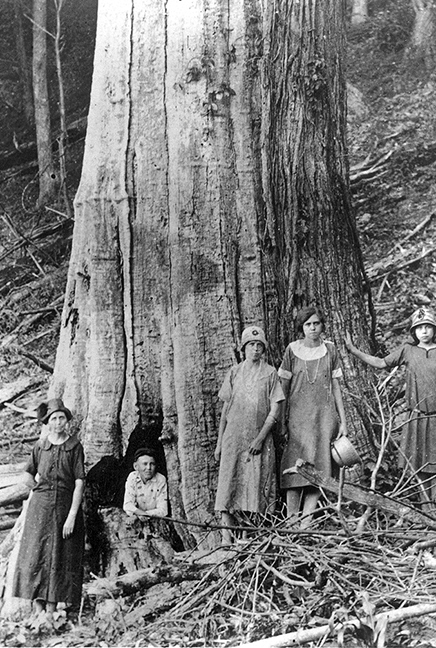
Shelton Family with dead Chestnut tree, ca. 1920 (Photo courtesy of Great Smoky Mountains National Park)
Chestnut blight has devastated our Appalachian forests. Before 1900, chestnut trees were widespread in Appalachia. They made important contributions to both animals and humans. Their nuts fed many wild animals, including squirrels, turkeys, and bears, and semidomesticated creatures such as hogs. The Cherokee used the tree’s nuts to make flour and a coffee-like drink, and its leaves for medicines. European settlers, in addition to eating the nuts, cut the trees down to support a thriving timber trade. But this valuable resource was essentially destroyed in the first half of the 20th century when imported Oriental chestnut trees brought a blight to which native American chestnuts had no resistance. Researchers have worked steadily to develop a blight-resistant genetic hybrid, and the results seem promising.
Digital Heritage Moments are produced at Western Carolina University in Cullowhee. To learn more, visit digitalheritage.org.