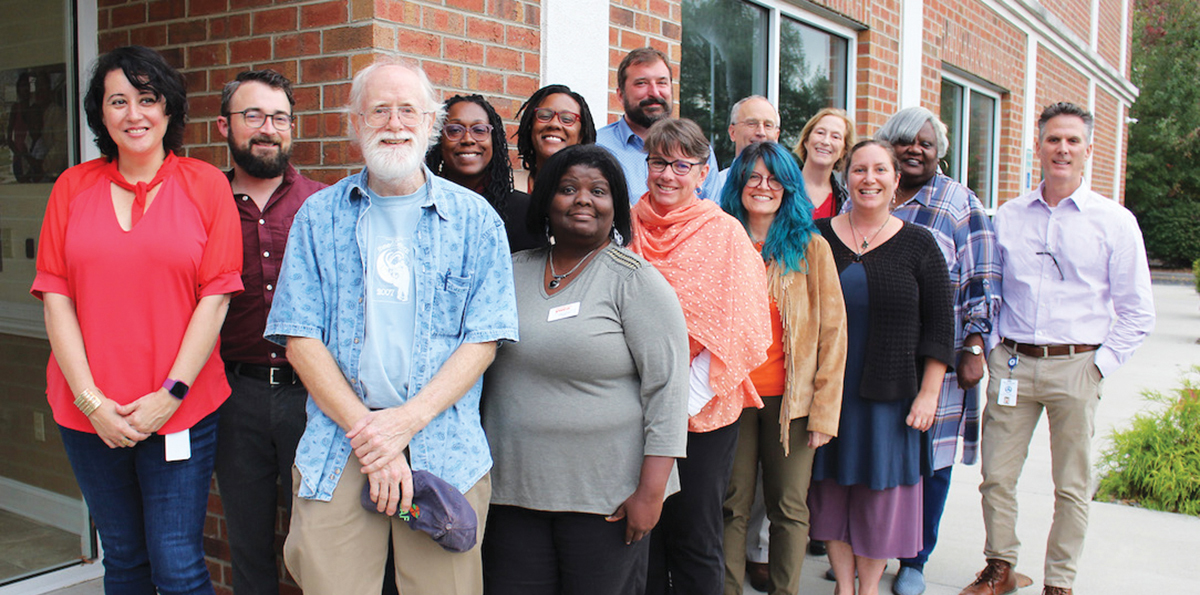
Asheville-Buncombe Community Land Trust. Photo by Pisgah Legal Services
By Emma Castleberry
In 2014, a report commissioned by the City of Asheville suggested a unique solution for rapid gentrification in the East Riverside neighborhood: the establishment of a community land trust (CLT). A CLT acquires land that remains “in trust” for the benefit of the community, while also removing it from the speculative market, which creates permanently affordable housing. Asheville-Buncombe Community Land Trust earned its nonprofit status last year and is currently taking applications for qualified homeowners who are interested in the program. “Our organization is rooted in community,” says ABCLT executive director Anna Zuevskaya. “Our goal is that ABCLT will provide opportunities for residents to remain in their neighborhoods as well as come back to communities where they grew up or lived in the past.”
CLTs allow buyers to purchase a home for less than it would cost on the open market. The homebuyer purchases the home outright and leases the land from the CLT through a ground lease. In return for purchasing the home at a discounted price, the homebuyer agrees to a resale formula that allows another low-income family to purchase the home at an affordable price. The CLT manages the sale price and ensures that the selling family builds some wealth through a predetermined, limited amount of the sale proceeds. “We are committed to building community wealth and we believe in bringing people together to achieve social change through collective impact,” says Zuevskaya. “We also believe that people who are or have been most impacted by social injustices are the ones who are best equipped to provide solutions to those very injustices.”
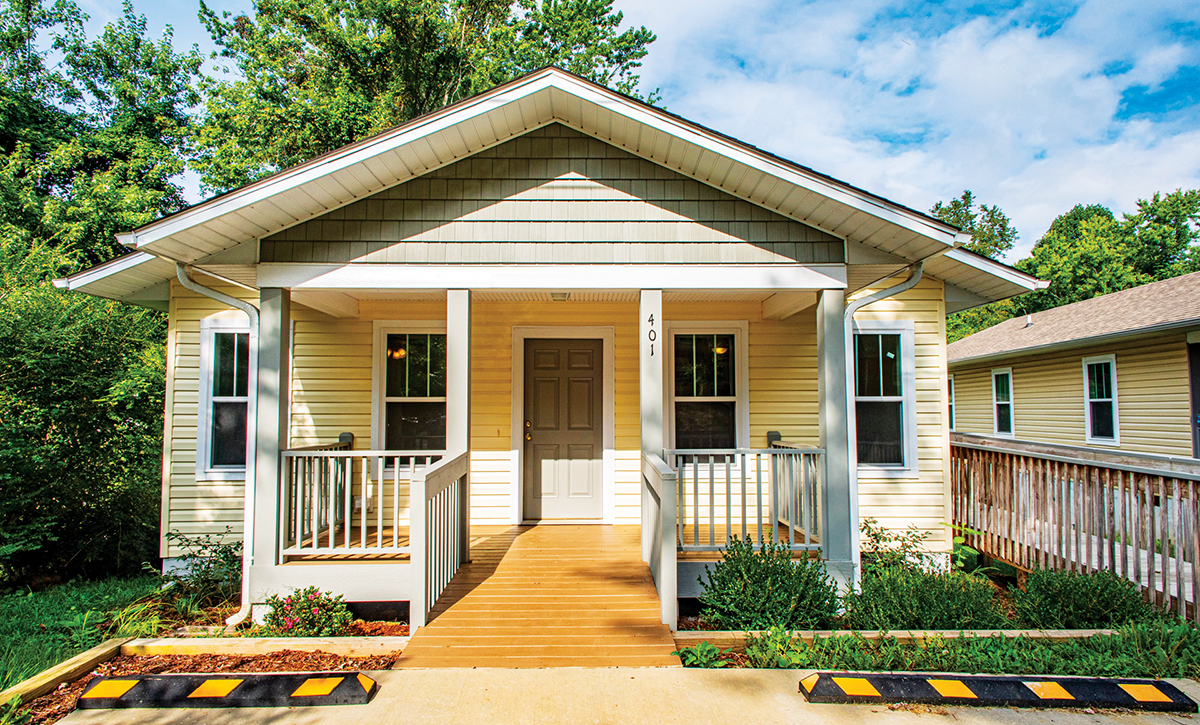
Photo by Chris Chromey of Chromey Creative
The community membership component is crucial for the function of a CLT. “CLTs are membership-based organizations and, in our case, there are certain items that ABCLT cannot do without an affirmative vote from the membership,” says Zuevskaya. “The Board of Directors is typically comprised of a third residents who own buildings on CLT land, a third general members who live within the service area, and a third public members who bring specific expertise to the organization.”
Buck Schall, a local realtor, became a member of ABCLT to offer his expertise. He helped the CLT acquire its first three properties. “The trust is basically a real estate process which keeps local property affordable indefinitely,” he says. Mary Beth Kingston, an ABCLT member and volunteer, serves on fundraising and community relations committees for the CLT. “Asheville, in its success as a desirable place to move to, is no longer affordable for most people who live on salaries that can be earned here,” she says. “The Community Land Trust will preserve our remaining BIPOC neighborhoods and homes from gentrification.”
ABCLT has a specific focus on BIPOC residents who have been displaced in the past due to Urban Renewal and gentrification, or who are currently at risk of being displaced. Community members can help not only by joining as annual members but also through donations, volunteering, participating in meetings and spreading the word about the CLT. “The Land Trust gives communities of color, Indigenous, and low-to-moderate income residents a chance to build economic and cultural capital,” says board member Reneé White. “We provide an opportunity for all voices to be heard and a sense of belonging by increasing the potential for long-term housing affordability.”
For more information, visit ABCLT.org.