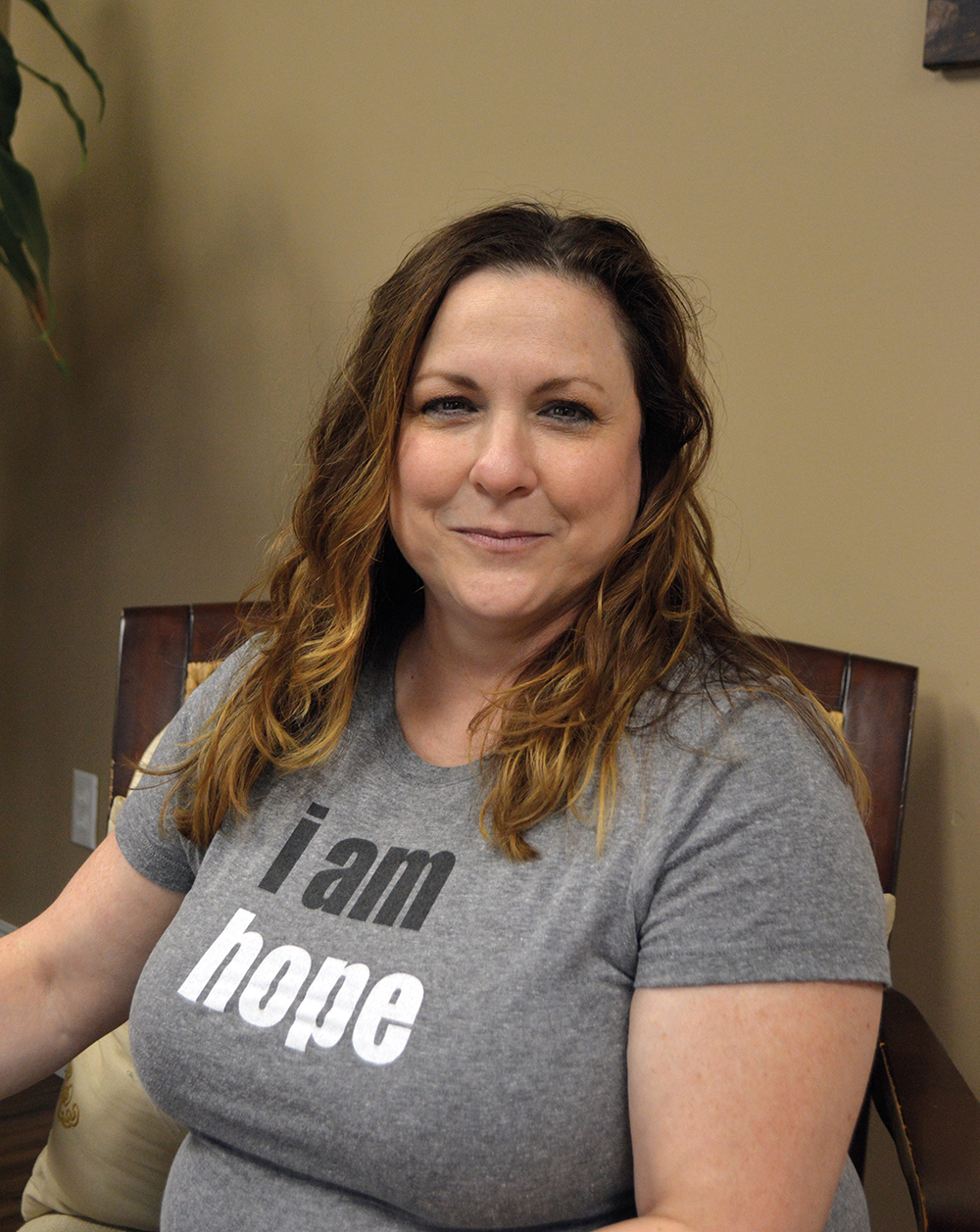
Susan Stader (Photo by Leah Shapiro)
Spotlight On: Next Step Recovery
By Gina Malone
An engaging display of charcoal portraits lines a wall in Next Step Recovery’s office lobby. Susan Stader knows the faces well, often using their stories to inspire others. She points to one portrait in particular and says the man pictured helped her establish this residence facility for recovering substance users ten years ago.
A nonprofit transitional living program for men ages 18 and older, Next Step Recovery provides support from specialists along with programs designed to lay the groundwork for life after addiction. Residents discover Next Step through referrals or their own initiative and stay from three to 18 months, acquiring the skills and structure needed to rebuild their lives. The program helps men because societal attitudes often make it difficult for them to receive treatment. There is, Susan says, the feeling that men should be able to pull themselves up by their bootstraps. The reality, she says, is “once someone starts an addiction, it’s very hard to stop.”
When Susan says, “The cost of addiction is high,” she knows what she’s talking about. She is the executive director of Next Step and, since the facility opened its doors in 2006, has seen addiction and related deaths rise to alarming rates across the nation. While Next Step provides assistance to an average of a hundred men a year, this is only a fraction of those needing help.
“We’re losing people left and right to heroin addiction and accidental overdoses,” she says. Statistics from the Department of Health and Human Services (samhsa.gov) show an estimated 22.7 million people in 2013 in the US needed treatment for addiction and only 2.5 million received it. “Most people don’t understand that some people are hardwired for addiction,” says Susan, who adds that fostering public awareness can end the stigma that often prevents a person from getting help.
Susan began her counseling career working with another residential program where she saw too many people leave and relapse into addiction. “That’s what inspired me to do this,” she says.
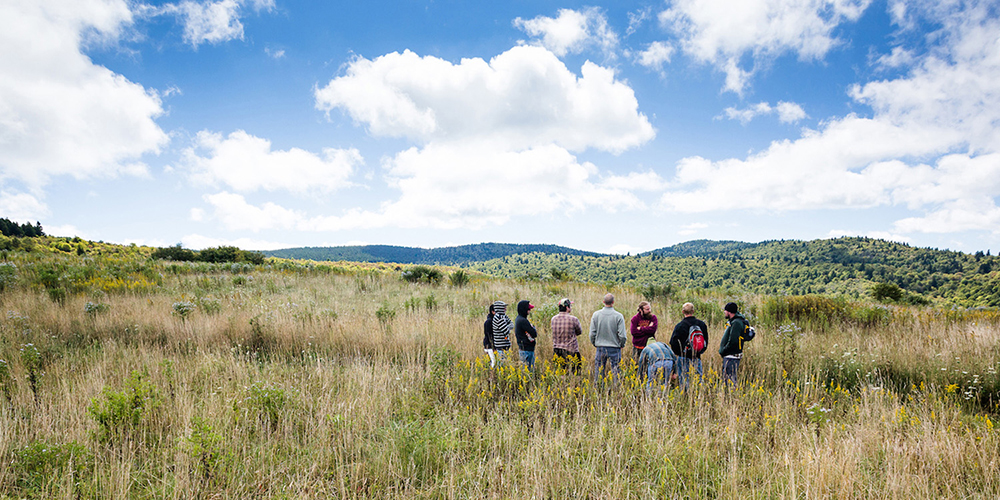
Residents hike at Max Patch as part of Next Step’s outdoor adventures program (Photo by Taylor Clark Johnson)
Next Step’s classes and programs in life skills such as nutrition, money management, and résumé writing help ease the men back into the “real world,” Susan says, while volunteer opportunities and outdoor adventures get them out into the community. “We want them to get involved in service work in the Twelve Steps community,” she says, “to feel grounded, like they can go out on their own.”
She has found that men who successfully come through the program often want to help others. Many, like peer support specialist Philip Cooper, choose to become certified addiction specialists. Philip’s philosophy is simple: “Iron sharpens iron.” When residents see staff members who are in recovery themselves, “it just trickles down,” he says. Staff members often assume paternal or brotherly roles for young men who don’t already have strong male role models. “We’re trying to help people change their whole lives.”
Admissions Director Brian Nolan echoes this idea, saying, “Somebody was there to say to me, ‘Take my hand; I’ll show you how to do this,’ and now I have the opportunity to do that for someone else.” He admits the work can be difficult. “You see people at their most vulnerable, at their ugliest, but you also see the transformation from cocoon to butterfly.”
Next Step Recovery depends on fundraising, grants, and residents’ fees to keep its doors open. Golf Fore Recovery, the annual golf tournament fundraiser, helps provide scholarships to defray the cost of treatment. This year’s event will be held Saturday, September 17, at Broadmoor Golf Links in Fletcher. This family-friendly tournament begins at 9 a.m. and includes lunch, contests, prizes, and a raffle. Learn more at nextsteprecovery.com.