By Emma Castleberry
Uncomplicated Kitchen is a small, community-driven nonprofit that offers hands-on cooking classes designed for people of all ages and skill levels. Led by founder Jenna Kranz alongside a small team of instructors and trained volunteers, the organization partners with local groups, schools and community centers to teach practical skills like knife work, meal planning and how to turn accessible ingredients into nourishing dishes. Its programs focus on building confidence, food literacy and joy in the kitchen.
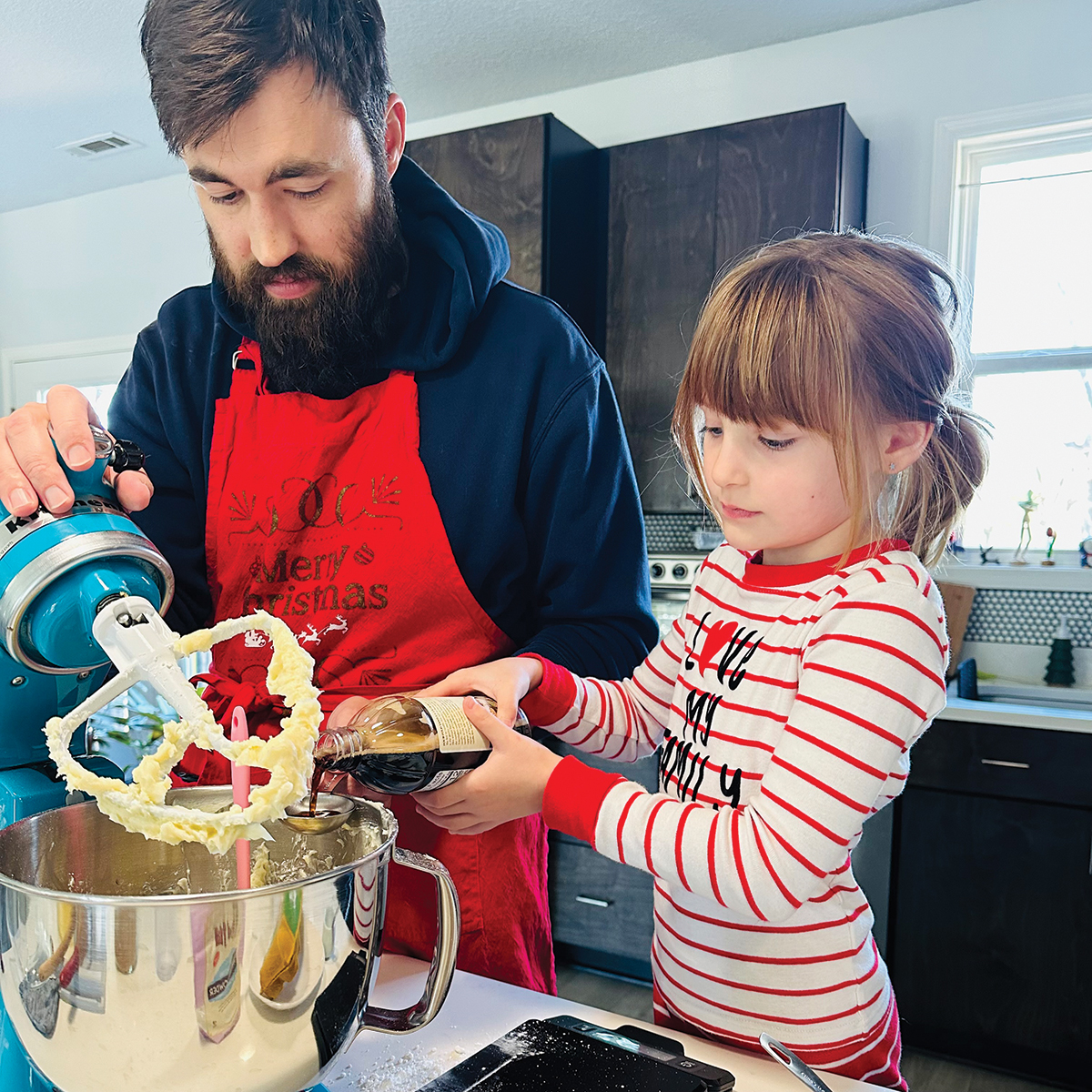
Josie helping her dad in the kitchen
Kranz founded Uncomplicated Kitchen after repeatedly witnessing a gap between access to good ingredients and the confidence needed to use them. As a volunteer at The Community Table in Sylva, she watched beautiful produce go untouched. “I learned that folks would grab more of the fresh stuff if they knew how to use it,” she says. She also had a booth at the weekly Jackson County Farmers Market where she sold vegan, organic and gluten-free granola and protein bars. She doesn’t like to label foods healthy and unhealthy, but because people perceived her product as “healthy,” she found they often came by to ask her how to use “healthy” produce like zucchini, beets, kohlrabi and kale.
“One day, this college student plopped a ton of fresh produce on my table, and asked me how she should cook the beets she just bought,” Kranz remembers. “If I remember correctly, she was on SNAP benefits and was trying to improve her health. She really wanted to learn how to cook, but…cooking as a life skill isn’t taught as often as it should be. I told her that I also had the same items that I’d just bought and I had to cook them, too. But there was no way I could explain this without physically having her do it.” Kranz invited the woman to her house and they cooked side by side in her kitchen. This was the first Uncomplicated Kitchen lesson, though the organization’s name didn’t come until about a year later.
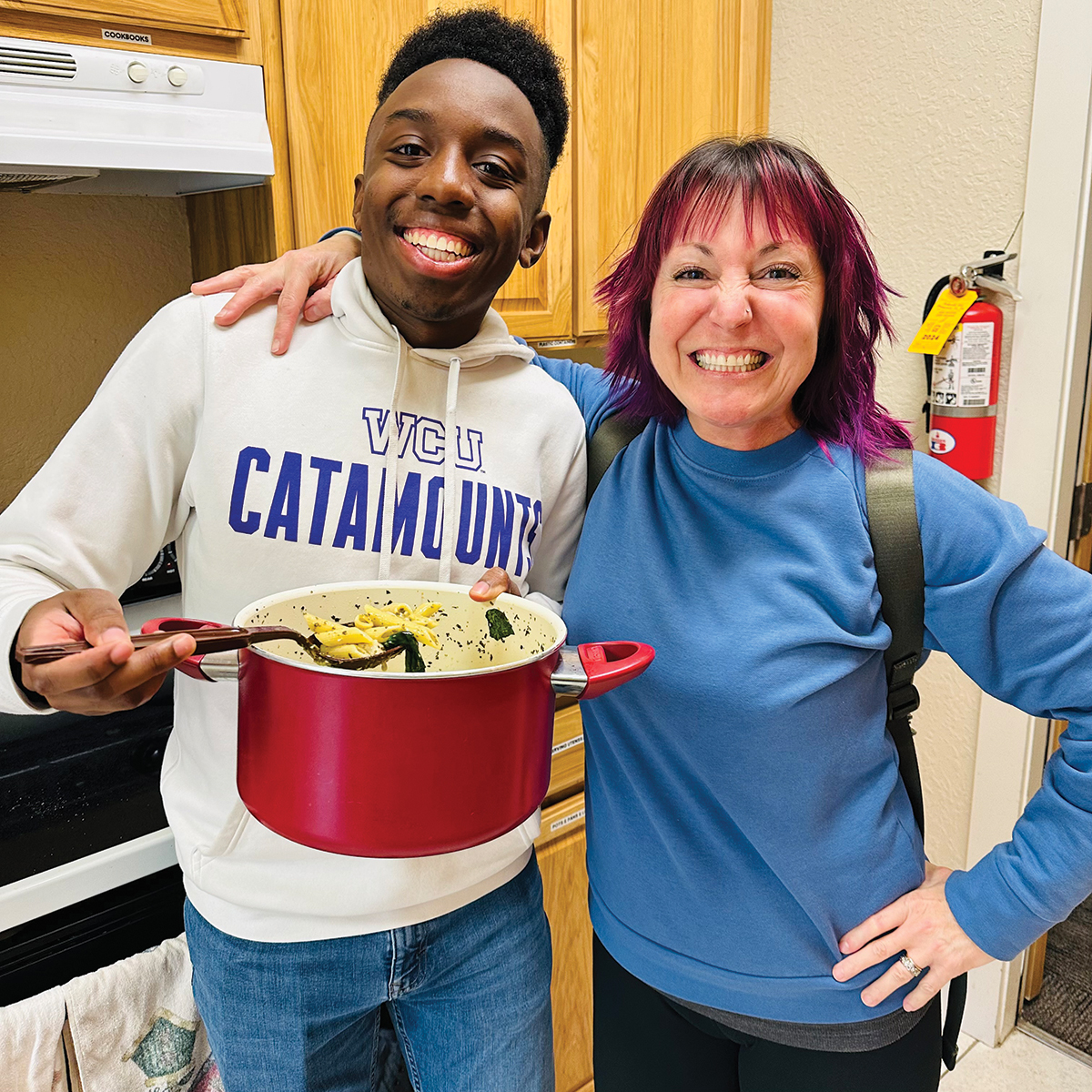
Danny Rochez, with Jenna Kranz, in College Cooking 101
“Expecting that someone can take ingredients, familiar or not so familiar, and know how to make a meal of it is more difficult than I ever would have realized,” says Kranz. “It’s experiential in nature. It takes time and practice and a recipe isn’t what gets someone to that place of comfort and confidence.”
Classes are structured around the goals of the students and simplicity is always a core tenant. “Success is finding peace and joy in the kitchen without spending a ton of money or time in doing so,” Kranz says. “We don’t believe that knowing how to follow recipes is the same as knowing how to really cook. The pandemic taught us a lot about making do with what we had. So success also looks like when folks open their refrigerators and pantries and see what may be in their gardens or at the markets and know what to do with it.”
Erin Casey Harris began attending classes after becoming friends with Kranz at the farmers market. When Harris brought her daughter Lily—who is autistic and had long struggled with food anxiety—to a class, the experience was transformative. “Lily was anxious at first, but Jenna was able to connect with her,” Harris says. They attended regularly, and the progress was unmistakable. “Even though it wasn’t every time that Lily would eat the food, we were beyond thrilled that she was tasting it and especially that she enjoyed the cooking skills and experience she was gaining.”
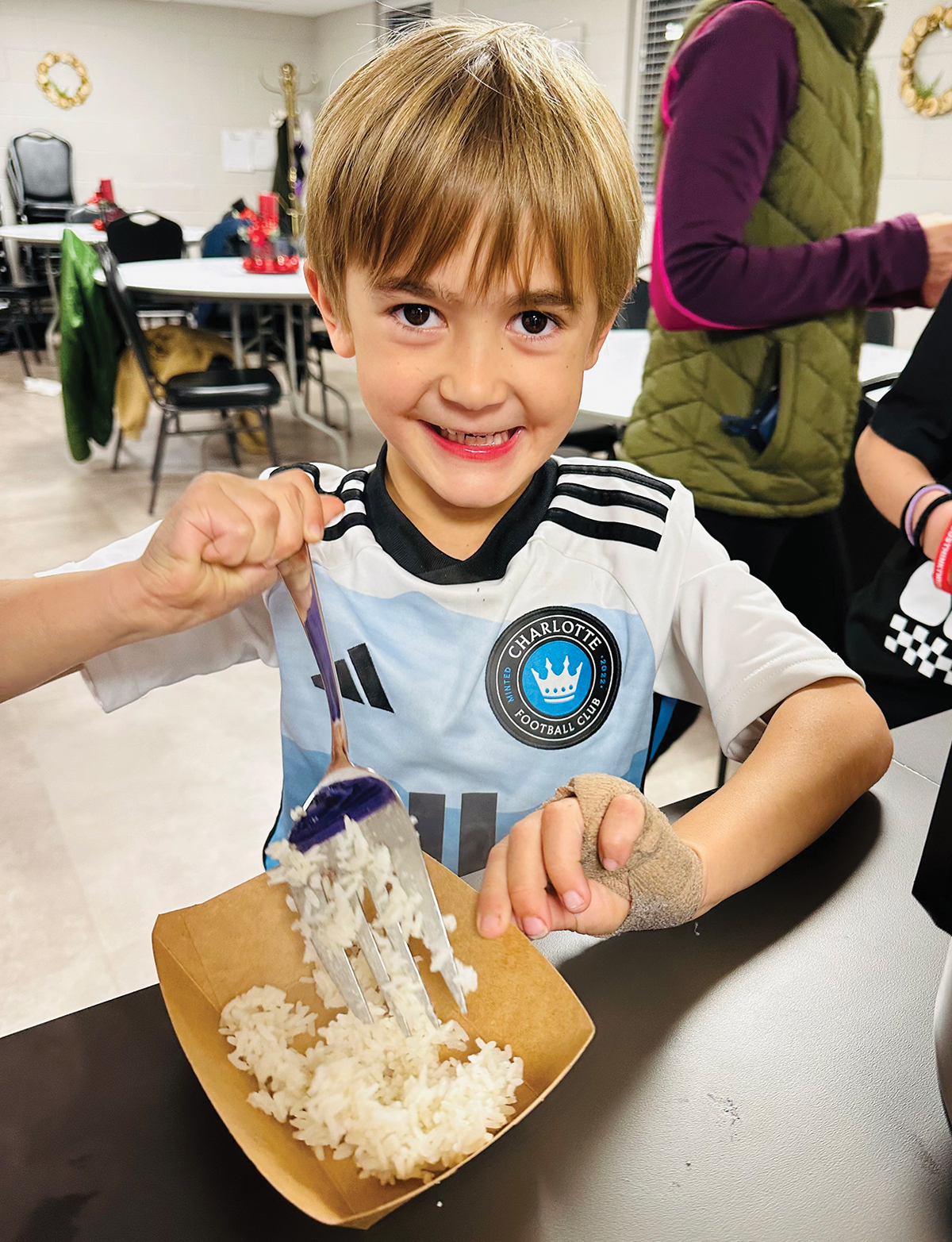
Ezra McGuire at a Mealtime Miracles class
Today, cooking together is part of their family rhythm. “I am still nearly brought to tears every time I’m in the kitchen and Lily helps me,” Harris says. “We need community surrounding food. My family, and I believe everyone, benefits from this often missing necessity of being together and sharing preparation and meals.”
Meghan Gangel, an assistant professor of psychology at Western Carolina University, started attending Uncomplicated Kitchen sessions after meeting Kranz at the bus stop. Her children quickly fell in love with the atmosphere of the classes. “They love the personalized attention they get from the many volunteers,” Gangel says. “They love feeling like they are in charge and know what they are doing. They will eat any recipe made from Uncomplicated Kitchen. It has also helped us integrate into the community. It became a sort of family for us when we have no other family in the area.”
Volunteer Mary Johnson first learned about Uncomplicated Kitchen through a friend and attended a presentation at First United Methodist Church in Waynesville. After attending several sessions supported by volunteers, she chose to join the team herself as a volunteer, helping with kitchen and ingredient prep and clean-up. “These classes are important to our community because the better equipped we are to provide good healthy options for our families the better off our families will be,” Johnson says. “Besides, everyone needs an Uncomplicated Kitchen.”
Learn more at UncomplicatedKitchen.org.