By Casey First
The Blue Jay (Cyanocitta cristata) is one of North America’s most recognizable and fascinating birds. They belong to the Corvidae family, alongside Crows and Ravens. Blue Jays are large-crested songbirds, measuring about 12 inches in length. Their bright blue feathers contrast sharply with their white underbelly and black markings around their neck and face. Their wings and tail are beautifully checkered with shades of blue, black and white. Similar to Indigo Buntings and Bluebirds, the blue coloration isn’t due to pigment but rather the microscopic structure of their feathers, which reflects light in a way that appears blue.

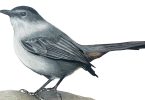
David Ballard, artist
Blue Jays are primarily found in the eastern and central US, with their range extending north to parts of Canada and south to Florida. These birds are highly adaptable to a wide variety of habitats, such as woodlands, parks and suburban areas. Blue Jays are regular backyard visitors and will readily come to a feeder. If you wish to attract them, try offering some of their favorite foods like whole peanuts and suet, but be warned: Blue Jays are known to be aggressive and territorial. They may dominate feeders, staking their ground as they scare off smaller songbirds.
When not at a feeder, Blue Jays are omnivorous, eating a large variety of nuts and seeds that they glean from trees and shrubs. They are especially fond of acorns, often helping to disperse oak trees by hiding acorns (caching) in the ground for later consumption. The average Blue Jay will hide 500 to 1,000 acorns each fall! In this way, Blue Jays play a vital role in forest regeneration. They will also eat fruit, and occasionally consume small vertebrates and raid nests for eggs and nestlings.
Oftentimes, you will hear the Blue Jays’ unmistakable noisy call (a harsh “jay-jay” sound) before seeing them. However, their repertoire is much more complex and includes mimicking different bird species such as Hawks, Owls, Eagles, Kestrels and Seagulls. Their vocal versatility includes whistling, clicking and squawking sounds. These advanced vocalizations provide crucial information, such as warning other Jays of predators. Additionally, the Blue Jay uses its crest for communication much like dogs use their tails.
Blue Jays typically form monogamous pairs that often stay together for life. When it comes to building a nest, unlike many other species of birds, the male and female work together to gather materials. Their nests can usually be found about 10 to 25 feet above the ground, in the crotch of branches of mature deciduous trees such as oaks and maples. Mama bird typically lays about a half dozen eggs and has one brood per season.
The good news for all of us is that the Blue Jay population is not in decline. This is largely due to their ability to adapt to different environments. Thankfully, these birds will continue to play a crucial role in ecosystem preservation. Unfortunately, Blue Jays tend to have a negative connotation and are often depicted as nuisance birds. However, these birds are incredibly intelligent, curious and beautiful, and are valuable members of the ecosystems.
Casey First is owner of North Asheville Wild Birds Unlimited, located at 946 Merrimon Avenue, Suite 120. Monthly bird events are free and open to the public, with no registration required. To learn more, visit NorthAsheville.wbu.com. Artist David Ballard lives in Candler. Find his work on Instagram at d.ballard.art.