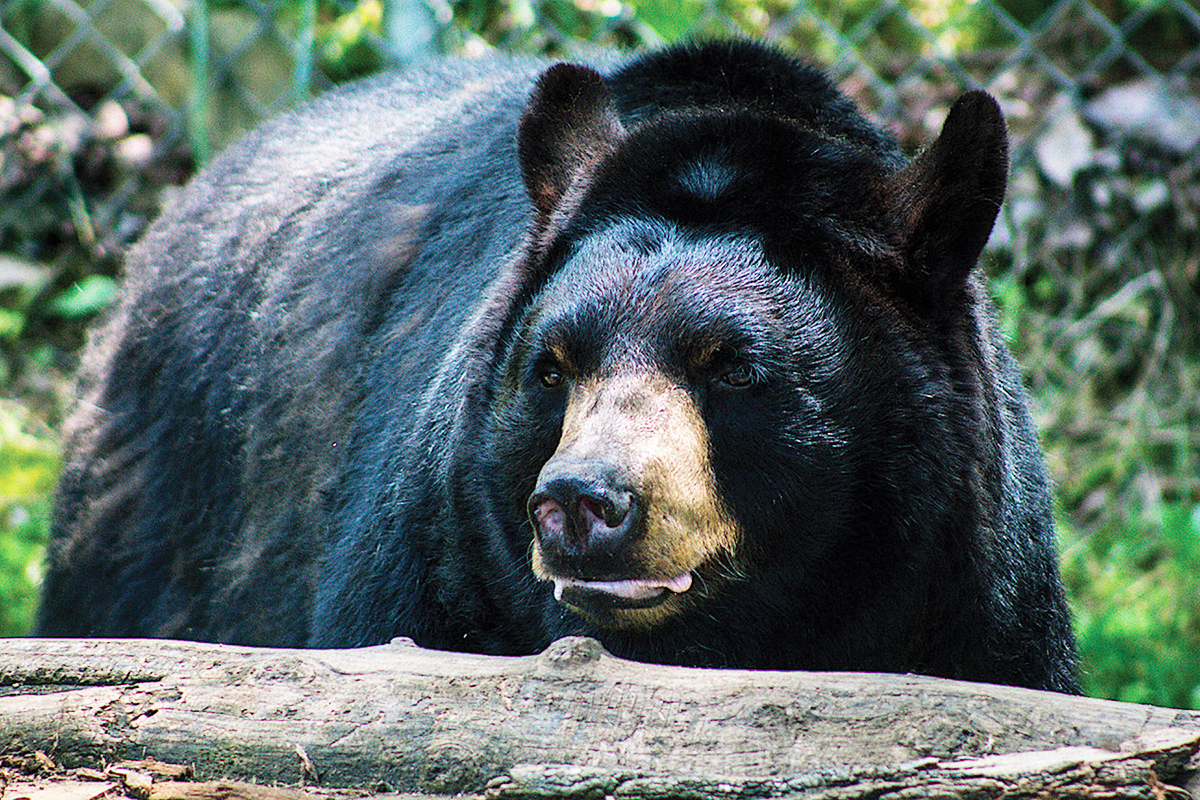
Photo by Casey Willis, courtesy of WNC Nature Center
By Paula Musto
As winter approaches, many of us think that various species of wildlife, most notably bears, are readying themselves for hibernation, a long, deep sleep that remains uninterrupted until spring brings warmer temperatures. But there’s more to hibernation than animals simply hunkering down in a warm, dark place to wait out the cold.
Despite common thought, the black bears we see around Asheville are not true hibernators but rather one of many animal species that enter into a state of torpor, similar to hibernation but also different. When in a torpid state, bears reduce both their heart and breathing rate, and their temperature drops, but less so than animals exhibiting hibernation in its truest form. Animals in a torpid state can and do wake up, but can go for days without awakening, eating or drinking.
“Animals that hibernate (or enter torpor) do it all for the same reason,” says Candace Poolton, the manager for public engagement at the Western North Carolina Nature Center. “They do it to conserve energy.”
The cold winter months, even in the relatively mild WNC climate, can be challenging for animals in the wild due to dwindling food supplies. Taking a cue from Mother Nature each autumn, as the days shorten and temperatures drop, these animals instinctively add layers of fat, eating voraciously while food supplies are available. Greatly adding to their summertime weight, these fat reserves enable the animal to burn fewer calories and survive in a dormant state while awaiting more favorable foraging opportunities come spring.
The two resident black bears at the nature center—Uno and Ursa—who know they have dependable food supplies, awaken from torpor less frequently than bears in the wild who awaken more often to forage for food especially on the periodic warm, sunny days that mark the Asheville winter. Uno and Ursa happily spend the winter in a warm, comfy den well-stocked with food. If accidentally awakened by a caretaker checking on them, Poolton says, the twosome are known to be slow to stir.
Animals in the wild display different states of dormant behavior with variable functions, durations and physiological changes. Here are some examples of how WNC wildlife spend the wintertime.
Bats
Come fall, many species of bats are on the lookout for a comfortable place to roost—a nook or cranny in a hollowed tree and dark ceilings in caves or abandoned buildings are favorite spots to congregate. Bats can enter torpor for just a few hours on a cold day to save energy or can remain inactive for a month or more. While in a torpid state, these critters will intermittently rise to go on nighttime hunts for insects.
Chipmunks
These furry animals prepare for winter by collecting enough food to last an entire winter. Unlike bears, chipmunks must eat during torpor. A single chipmunk can gather and store a hundred or more acorns each day before retreating to its burrow where it will curl up into a ball to protect itself from the cold. A chipmunk’s deep sleep is interrupted by regular cycles of wakefulness.
Skunks
Unlike chipmunks, skunks do not accumulate food to store for winter. Instead, similar to bears, skunks spend the fall eating as much as possible to create thick layers of fat that serve as insulation against the cold. While asleep in their dens, skunks metabolize their fat reserves awaking periodically to search for food.
Box Turtles
These reptiles don’t hibernate, but rather go into brumation, a lethargic state like hibernation but different. The process does not depend on stored fat, but rather greatly reduced metabolic activity. While bears and other mammals eat a lot to fatten up for hibernation, turtles stop eating and burrow deep under the soil and leaves for protection from the cold. As their digestion slows, so does their heart and respiratory rates. Other reptiles, including snakes and lizards, spend wintertime in brumation.
Frogs
These cold-blooded amphibians brumate during winter, but also do not stay inactive the entire time. On mild days, frogs will increase their activity to forage for food, and when temperatures drop again, they return to dormancy.
Aquatic frogs brumate beneath the water’s surface sitting completely still on the mud below. Frogs that spend most of their time on land, such as tree frogs, find warm spots under leaves and bark in the soil or in crevices in trees and rocks. If you encounter a frog in the wintertime that appears frozen, don’t assume that it is dead. While icy on the outside, it may be functioning just fine inside.
Of course, there are many species of animals that do not slow down in the winter months. Poolton says winter is an excellent time to visit the Nature Center to watch many animals, including the wolves, otters and bobcats, frolic on a snowy day. And, on a sunny winter day, you just might catch Uno and Ursa taking a break from their deep sleep.
Paula Musto is a writer and volunteer for Appalachian Wild, a nonprofit whose mission is to help injured or orphaned wildlife, support WNC’s wildlife rehabilitation network and provide wildlife conservation education. To help save wildlife, donate and learn more, visit AppalachianWild.org.