By Paula Musto
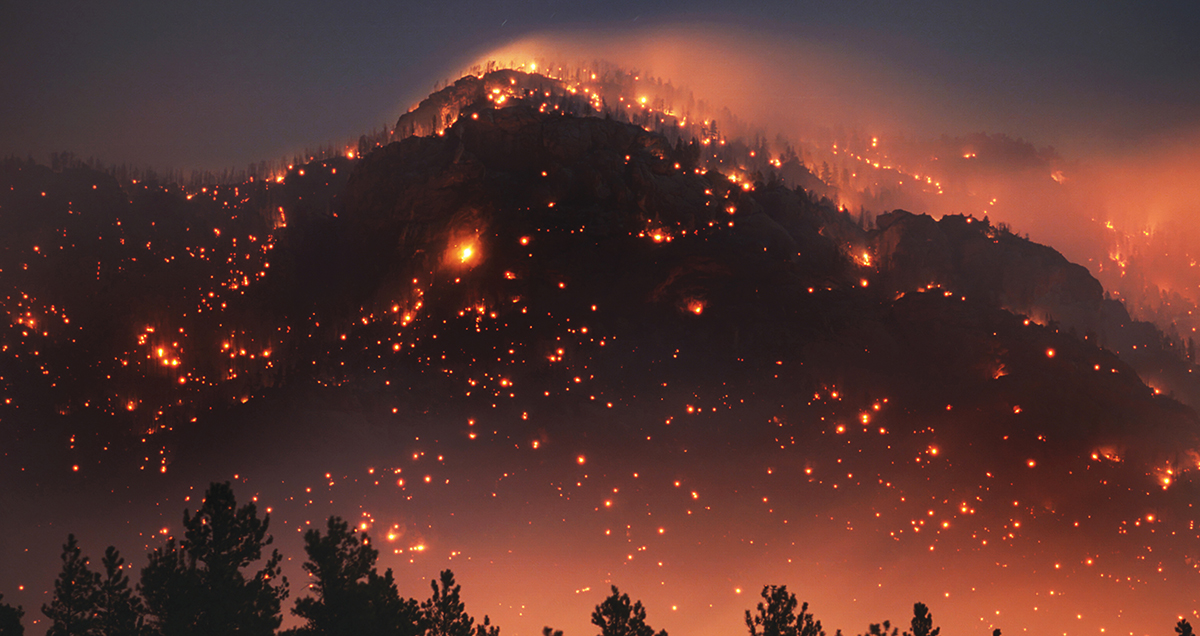
The flames can be scary and the smoke annoying, but fires play an important role in our region’s heavily forested ecosystems—one that is beneficial to wildlife and their natural habitats. It’s something to keep in mind with the advent of the spring fire season in the Southern Appalachians that runs through May and repeats again in the fall.
“Most people do not appreciate how historically important fires are for the health of our forests,” says Steve Norman, a research ecologist with the US Department of Agriculture Forest Service Southern Research Station who has studied fire patterns in Western North Carolina over the past 100 years.
Frequent fires were once considered a normal, reoccurring part of our mountain landscape for thousands of years, Norman says, but a century ago progressive thought began emphasizing suppression rather than the natural rhythm of fires in our forests. Woodland blazes, seen as a scourge and a threat to progress, were roundly condemned, including stern warnings from forestry mascot, Smokey Bear.
“We thought we could control fire,” Norman says. “But there were unintended consequences. We did not understand how fire suppression would affect entire ecosystems.” Today, he says, it’s important for us to understand the complex role of fire in our forests, including its risks, hazards and ecological and watershed benefits.
Among the benefits, fire reduces dead vegetation, rejuvenates soil, stimulates new growth and improves foraging habitats for wild animals. When fire is removed from the forest lifecycle, ecosystems can become out-of-balance to the detriment of wildlife and habitat diversity.
Native Americans understood this and used fire to run game, maintain their hunting grounds and keep ecosystems healthy. Today, says Norman, it is important for people, even those living in an urban environment, to understand the role of fire and distinguish between destructive blazes (intentional or accidental) that can spiral out of control and those that serve the needs of sustainable forests via good fire ecology.
Josh Kelly, a public lands biologist with the Asheville-based nonprofit MountainTrue who also monitors fires in the region, says a combination of abnormally warm temperatures and a severe drought last fall contributed to an especially active wildfire season in the region, with dozens of blazes that firefighters struggled to contain. It could be a harbinger of what’s to come.
“Climate change is causing more extreme weather events—it might well mean more fires and more intense ones in the future,” Kelly says. Last year’s active wildfire season would not have happened, even with the abnormally dry conditions, he adds, if autumn temperatures had not averaged significantly warmer than normal.
The biggest fire threat is to human life and property, due in part to development in fire-prone areas. Deer, foxes and bobcats run; birds and bats fly away; and mice, lizards, snakes and salamanders go underground into burrows or under rocks and fallen logs as a fire approaches. Turtles survive by digging their way to safety underground or using their shells for protection.
Some animals, such as young birds, are vulnerable, but, overall, the benefits far outweigh any loss. Many bird species and bats thrive when fire clears out forest underbrush. With less clutter, it is easier for these animals to find the foods they need.
Some tree species, such as oaks, also benefit from regular fires. Most oaks have thick bark, allowing them to survive surface burns. Afterwards, the trees sprout from the base of the trunk. Fires also remove shade, creating more ideal conditions for these trees to reproduce.
While all fires have the potential to become dangerous, the controlled, prescribed burns conducted by federal and state forestry specialists are closely monitored with tight safety parameters. These fires are one of the most effective tools in preventing uncontrolled blazes—they not only prevent the spread of more damaging, larger wildfires but also promote ecological health.
“It’s important that we keep everything in balance because there are consequences for everything in nature,” Norman says. “As we’ve seen during recent recurrent droughts, wildfires are not going away. But we know with prescribed burns there is a lot we can do for fire to work to our benefit.”
Ultimately, the responsibility of preventing destructive wildfires lies with us. Smokey Bear’s message is correct—human activity is to blame for more than 90 percent of damaging blazes. But wildlife suppression efforts alone are not enough. Knowing and appreciating fire can keep us, and our wildlife, healthy and safe.
Paula Musto is a writer and volunteer for Appalachian Wild, which supports WNC’s wildlife rehabilitation network. To learn more or donate, visit AppalachianWild.org.