David Ballard, artist
By Casey First
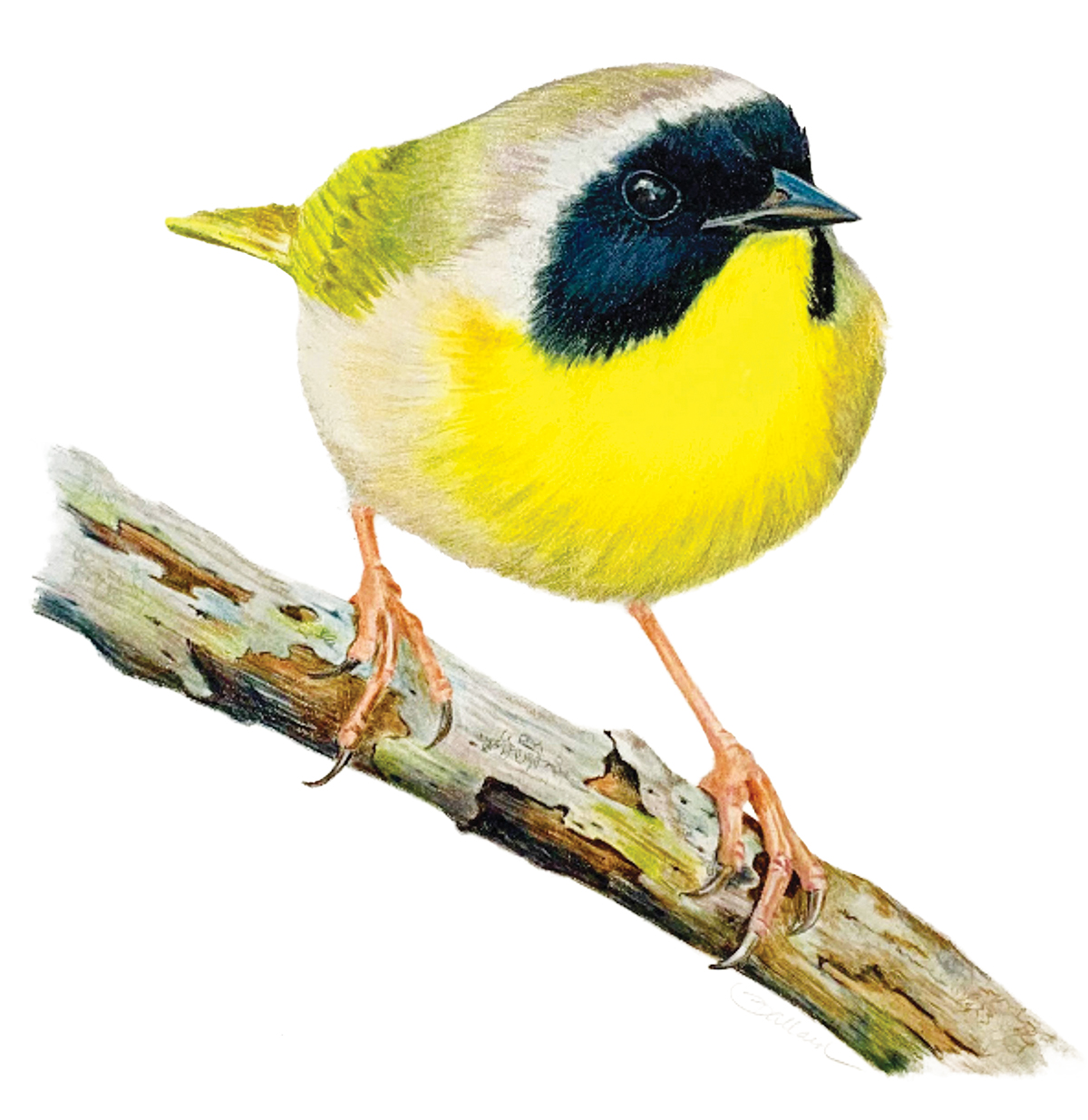
The Common Yellowthroat (Geothlypis trichas) is a small, chunky bird and is one of the most common warblers in North America. The Yellowthroat is easily recognizable with its bold black face mask, or “bandit,” flashy yellow throat and belly, and thin, white headband. Adult males also have a greenish-olive upper head and body, while the females lack the black mask, but have an equally beautiful yellow underbody. The female’s lack of the black bandit is thought to play a role in keeping her more inconspicuous during vulnerable periods like nesting.
Found throughout much of the US, Canada and Mexico, this warbler is easy to spot and is abundant during breeding season in the spring and summer months. During migration, most of these birds will flock to wintering grounds in parts of the southeastern US, Mexico, Central America and the Caribbean. Some birds in the South and along the California coast are year-round residents.
A sly and sneaky little bird, they tend to flit around in the dense tangles and shrubby vegetation of habitats that range from wetlands to prairies to pine forests. Their ability to thrive and adapt in a large range of habitats helps account for their wide distribution across much of North America.
The Common Yellowthroat tends to forage on or low to the ground as they glean insects like ticks, bees, tiny grubs, moths, caterpillars and ants from bark, leaves and flowers. Largely insectivores, they will, however, eat the occasional seed or fruit if easily accessible. The Yellowthroat displays “skulking foraging,” often moving like a mouse through the cattails and shrubs, staying hidden from predators.
These warblers typically won’t come to a backyard bird feeder, but if you happen to have a yard with a brushy cover and do spot one, try offering dried or live mealworms or suet on an open platform feeder.
The Common Yellowthroat is a lively and vocal bird with a bright and uplifting song that is a rhythmic witchety-witchety-witchety-witch and can be heard as the male scampers about the marsh edges defending territory or hoping to attract a mate. Their call is a sharp chip or chuck that both males and females display to ward off predators during times like nesting.
During nesting, the female will build a bulky, open-cup nest that is low to the ground and supported by sedges, grasses, cattails and other low plants. In marshy areas, nests are built a little higher up above the water. Nests are tucked deep into the same habitat that the Common Yellowthroat thrives in, concealing nestlings from dangerous prey. Mama bird will typically lay three to five eggs and will have two broods per season.
The wetland degradation in North America has caused some strain on the Common Yellowthroat population. However, their numbers have remained consistently stable for the most part over the course of the past 50 years. This is welcome news for all of us that get to marvel at the unique beauty these warblers offer to the natural world.
Casey First is owner of North Asheville Wild Birds Unlimited, located at 946 Merrimon Avenue, Suite 120. Monthly bird events are free and open to the public, with no registration required. To learn more, visit NorthAsheville.wbu.com. Artist David Ballard lives in Candler. Find his work on Instagram at d.ballard.art.