By Casey First
The Red-bellied Woodpecker (Melanerpes carolinus) is a medium-sized bird, slightly larger than a Robin and about the same size as its relative, the Hairy Woodpecker. As with many birds and their names you might think this bird should be called a red-headed woodpecker. (There is actually another bird called Red-headed Woodpecker.) But upon a closer look at the Red-bellied Woodpecker, you can see a subtle red tinge on the underbelly if the bird is hanging upside down. Much more evident in the males is a vibrant red patch on the top of their heads (cape) that extends about one-quarter of the way down their backs. The female is missing the red top hat. Both sexes have a distinct black and white checkered pattern on their back feathers and a light-grayish underbelly and face. They have black, straight bills, designed to excavate the sides of trees, and dark gray legs and feet.
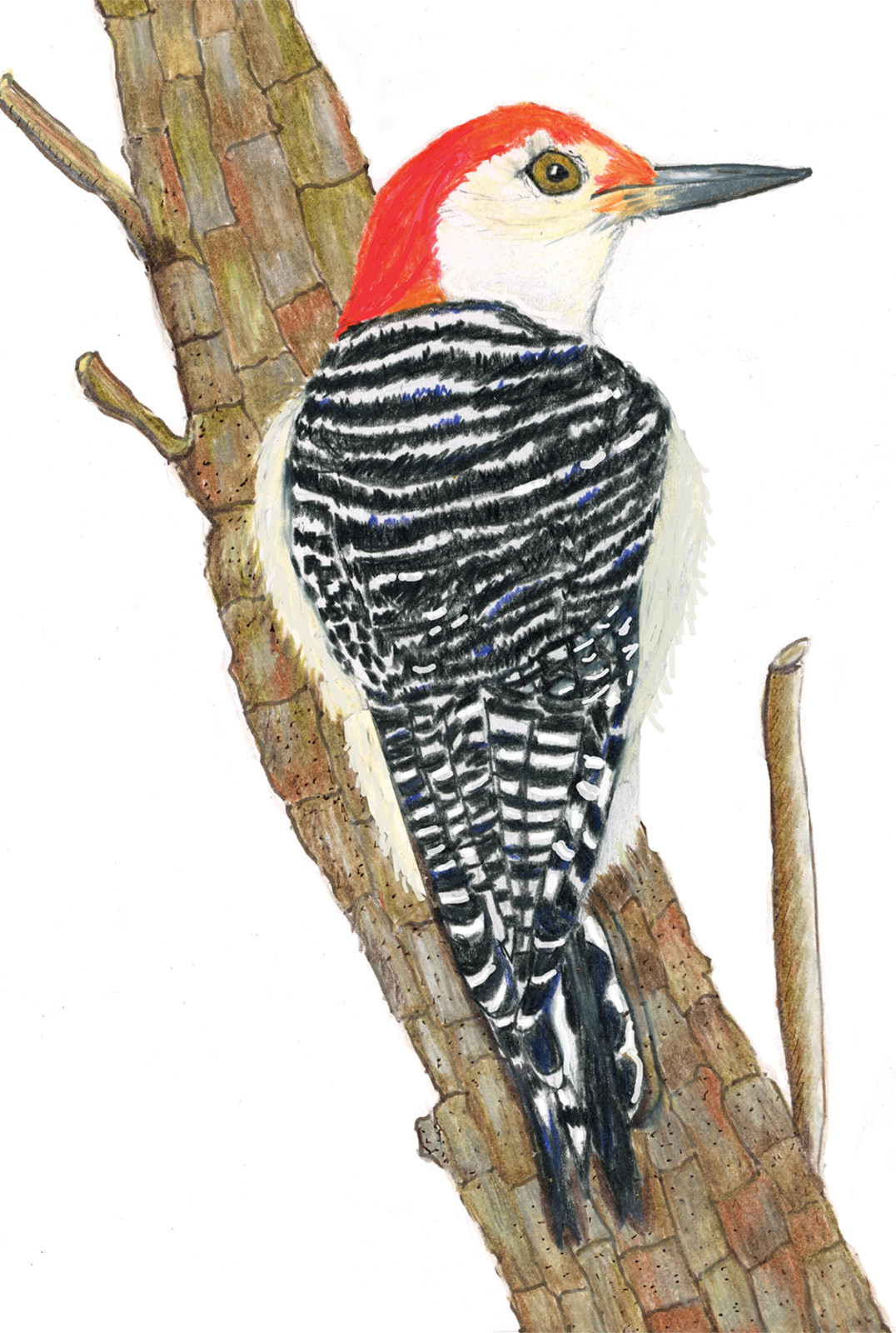
Red-bellied Woodpecker. Stephanie Sipp, illustrator
The Red-bellied Woodpecker makes its year-round home in the eastern US, typically extending no farther west than the eastern parts of Texas to the south and Minnesota to the north. This omnivore can be seen foraging on the sides of large trees such as oaks and pines, meticulously picking at the bark in search of buried insects, cached seeds or sweet, oozing sap. An interesting fact is that they can extend their tongues (which have a barbed end) a full two inches past the tip of their beaks! Although their diet consists largely of insects, they may also be seen feeding on native berry trees or cracking open acorns that they have wedged into a crevice in a tree or fence post. They frequently venture away from their wooded habitats to grab a quick snack at a backyard bird feeder. For this reason, they are popular with even novice birders and because of their bold markings are easy to identify. To lure them in and see their beauty up close, try offering some of their favorite foods like shelled or unshelled peanuts, sunflower seeds and suet (in the winter months).
When not in sight, the most common call that both males and females make is a rolling “chur,” or you may hear their song that sounds like “chuck-chuck-chuck.” Another unique way to know if they are nearby is to listen for drumming on a tree which lasts only about a second or two and is typically interspersed with this unmistakable “chur.”
For the most part, the Red-bellied Woodpecker nests in dead hardwood trees or in large fence posts or tree stumps. The male excavates several holes while the female ultimately chooses the one to be used and completed. They will also use a nest box or a cavity that has been drilled out by another woodpecker. The nest site is lined with soft wood chips and the nesting pair will usually have one brood per season in the northern parts of the US and may have up to three in the south. The female lays about four or five eggs, and time from incubation to fledge is about two weeks.
The good news for us and for the Red-bellied Woodpecker is that their numbers are abundant and they have expanded their range in the past few decades. So we can take awe in their natural beauty for some time to come!
Casey First is owner of Wild Birds Unlimited, located at 946 Merrimon Avenue, Suite 120, in Asheville. Monthly bird events are free and open to the public, with no registration required. To learn more, visit NorthAsheville.wbu.com. Stephanie Sipp is a professional nature illustrator and educator who creates joyful images of animals, birds, flowers and places which are celebrated by followers both regionally and online.