A century ago, the emergence of abstraction reshaped modern painting by loosening artists’ obligation to depict the visible world. From Representation to Abstraction, opening with a public reception on Friday, February 6, from 5–7:30 p.m. at the Asheville Gallery of Art and running through the end of the month, brings that evolution into focus through the work of local painters Susan Spies and Jude Kaye.
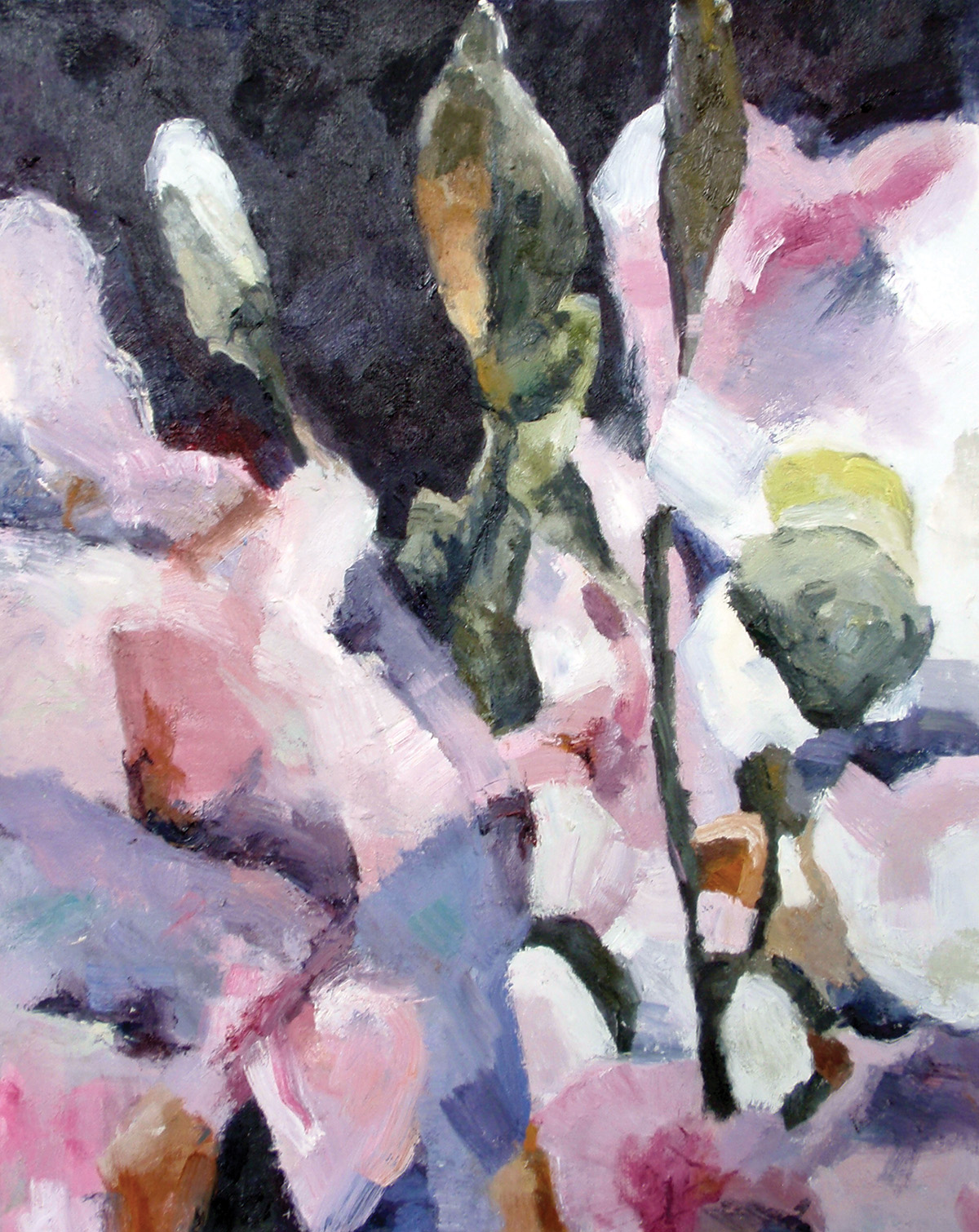
Primrose. Susan Spies, artist
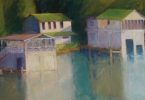
Self-described as a “lousy gardener but an intentional flower painter,” Spies works primarily in oils and often begins with botanical subjects, from lilies to gladiolus. “For this show, I am more on the representational side of the spectrum than Jude, although my heart beats very fast for abstraction,” she says.
While her floral imagery remains identifiable at first, it quickly blooms into something more gestural. “I still feel that quiet joy that comes from putting what I see onto a flat plane and then making it come alive,” says Spies.
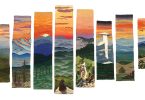
Kaye’s approach embraces abstraction as a counter to rationality. After more than 35 years as a management consultant for nonprofit organizations, she turned to painting following retirement, building on earlier work as a stained-glass artist. The shift marked a move away from analysis and toward intuition.
“My consulting work required me to be practical, academic, methodical and analytical,” she says. “I lived in a world of words, rational thought and big-picture thinking. As a painter, I get to inhabit a different world—one of emotion, experimentation, playfulness and impulsiveness.”
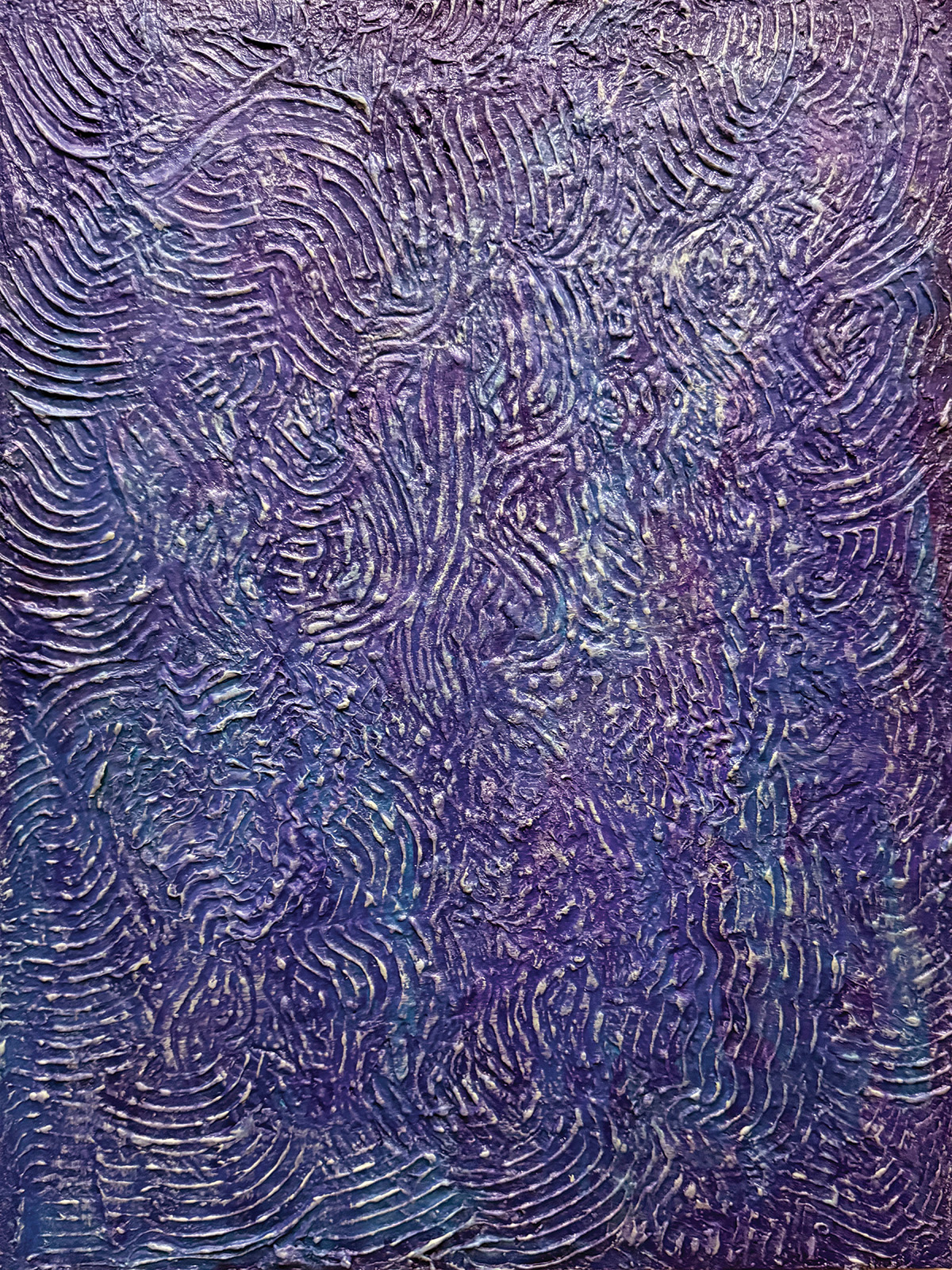
Tropical Fish. Jude Kaye, artist
Her paintings for From Representation to Abstraction are largely nonrepresentational and grounded in physicality. Acrylic mediums, sand, glass balls and washi tape create layered surfaces that reward close looking and emphasize texture as a primary expressive tool.
Despite their different processes, Spies and Kaye share a deep respect for female artists in history whose works were often overshadowed by male contemporaries. That shared lineage helps anchor the exhibition’s dialogue.
The viewer, too, plays a role. Without fixed narratives, the show begs for interpretation. “Abstract painting invites the viewer to be an active participant rather than a passive observer,” Kaye says. “At its best, abstract art invites viewers to access their own imagination.”
Spies agrees. “Once I put a painting out there, I’m fine with however it’s perceived—as abstract, realistic or a memory or feeling,” she says.
The Asheville Gallery of Art is located at 82 Patton Avenue in downtown Asheville and is open daily from 11 a.m. to 6 p.m. For more information, visit AshevilleGalleryofArt.com or follow the gallery on Facebook and Instagram.