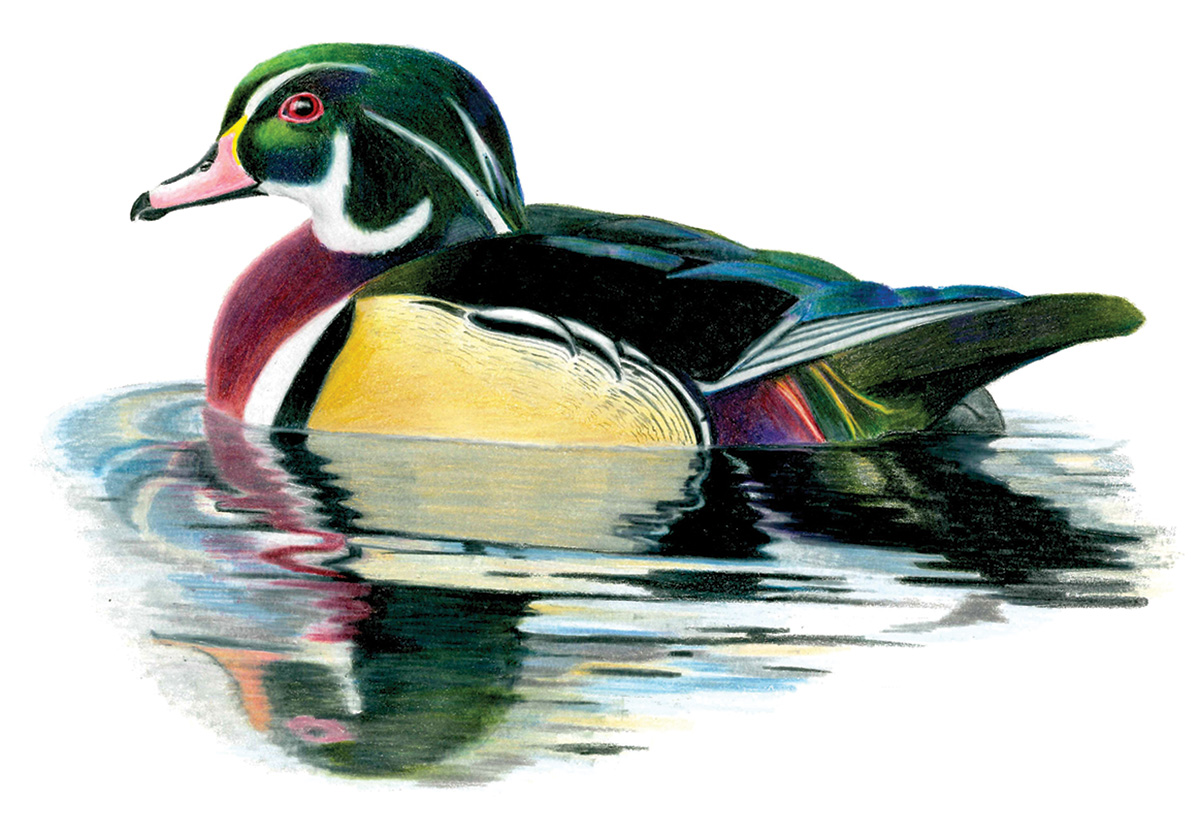
David Ballard, artist
The Wood Duck (Aix sponsa) is one of the most striking and colorful waterfowl in North America. The male is the most recognizable and decorated of the two, with a chestnut tan speckled chest, iridescent emerald-green cap, bright cherry-red eye, hints of salmon in its bill and pure white ornamentation throughout its body. The female is much drabber, sporting an overall gray-brownish coat, a white eye ring and a slightly crested head.
Wood ducks are common year-round residents of the southern US and Pacific Coast. During the warm summer months, they can be found throughout much of the US and southern Canada. Their breeding ground is in the central and eastern US. Wood duck migratory routes can cover more than 1,000 miles, and, unlike many other ducks, they migrate in smaller numbers.
The Wood Duck is commonly referred to as the “Duck of the Woods” because they are one of the few waterfowl species that perch and nest in trees. They thrive in lush, forested wetlands, wooded swamps and freshwater marshes, relying on the close-by wooded areas for safe shelter and foraging. They use their razor-sharp nails on their webbed feet to dig into branches as they dance and maneuver through the thick timber amidst the wooded landscape. Most often, you will see them in open water only when they are foraging for food. They prefer to congregate on the fringes of the shallow shore where vegetative cover is abundant and dense.
When on the water, Wood Ducks exhibit a behavior known as dabbling, which is comprised of short and shallow dives. These “dabbling ducks” feed at the surface, tipping their heads underwater, foraging for aquatic plants like duckweed, algae and pondweeds. On land, they graze and forage, using their strong bills to gather acorns (their favorite), other nuts, seeds and sugar-laden berries. When food is scarce in winter, they will even venture to agricultural areas, feeding on waste crops like corn. They are omnivores, but plant material makes up the bulk of their diet.
Wood Ducks typically nest in natural tree cavities that are close to or hanging over water. This allows the hatched ducklings to fledge straight into the water. Mama Duck will lay up to two dozen eggs per brood and will typically have two broods per year, oftentimes using the same nesting site. Wood Ducks are one of the few waterfowl that have multiple broods. Nests are usually built into natural caverns or holes, like those abandoned by a woodpecker. However, wetland trees with cavities are becoming rare due to climate change and degradation. In response to this destruction of their previously welcoming habitat, Wood Ducks have turned to using man-made nest boxes. This simple gesture on our part of providing nest boxes pays homage to their breathtaking beauty and our desire to preserve it. It is heartwarming to know that despite the obstacles, the Wood Duck’s population has continued to thrive over the past 50 years.
Casey First is owner of North Asheville Wild Birds Unlimited, located at 946 Merrimon Avenue, Suite 120. Monthly bird events are free and open to the public, with no registration required. To learn more, visit NorthAsheville.wbu.com. Artist David Ballard lives in Candler. Find his work on Instagram at d.ballard.art.