By Paula Musto
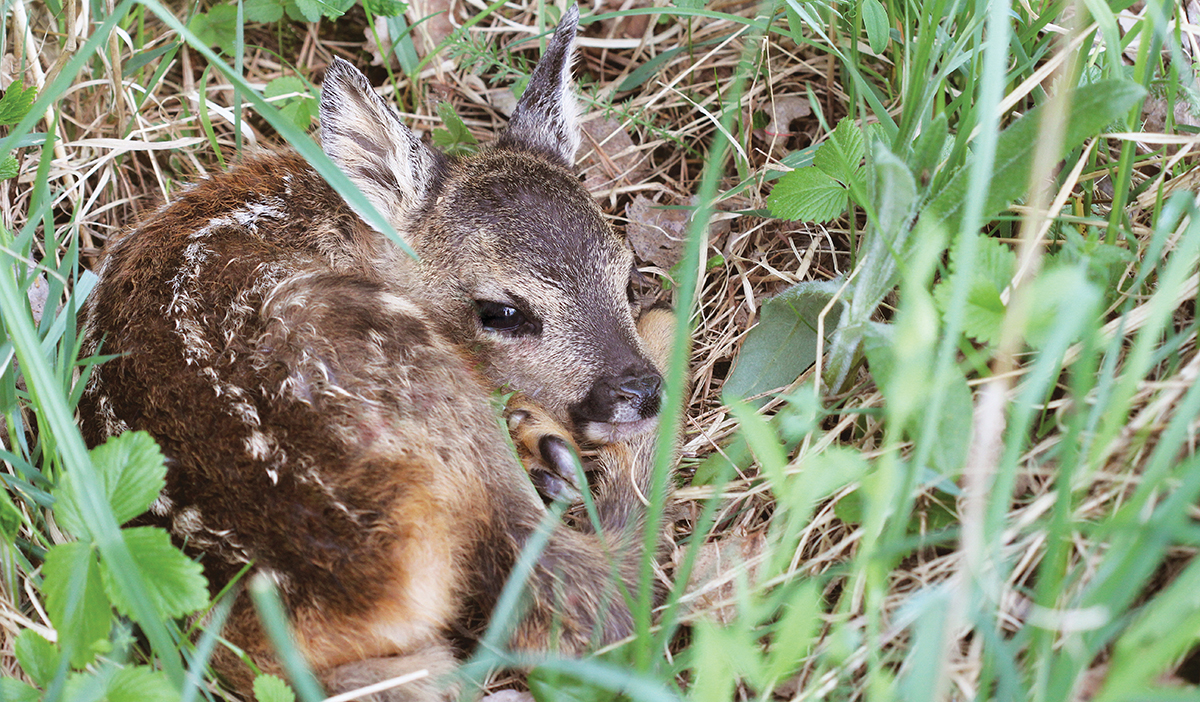
Why is the little fawn all alone in the woods? Is the unmoving bird on my patio dead? Are the baby rabbits nesting in our backyard abandoned? Help! There’s a squirrel on the road with a broken leg. A lawn mower ran over a box turtle—can we save it?
The Appalachian Wildlife Refuge (AWR) hotline receives thousands of such calls each year from concerned folks who stumble upon animals that may need rescue. The volunteers who answer these inquiries help the finders (a term for people who find wildlife that appears to be in distress) navigate the sometimes tricky mission of aiding animals injured or orphaned.
“Wildlife hotlines serve a number of important purposes,” says Sue Massi, an AWR volunteer who helped create the organization’s hotline (828.633.6364) eight years ago. “We provide guidance to finders to determine if the critter is truly in need of intervention and, if so, the appropriate response.”
In doing so, the hotline becomes a valuable educational tool. Finders can converse with trained volunteers who explain normal wildlife behavior—why a fawn is hidden in the grass away from its mother or a bird lying still on the ground. Trained hotline volunteers identify what animals are at risk for rabies. In these cases, the North Carolina Wildlife Resources Commission (866.318.2401) should be notified.
“Appalachian Wild hotline is a 911 of sorts for animals,” says Yvette Baugh, a volunteer who devotes several hours each week to answering calls. Baugh says the time spent on the phones is rewarding in knowing that you are helping a wild creature that might not otherwise survive. “Animals feel pain just like us, and often they are injured due to human activity,” Baugh says. “In Asheville, we are privileged to share our space with wildlife. They have a right to be here just as much as us.”
Hotline call-takers advise on how to minimize handling an injured creature and, if a move is deemed necessary, how to keep it warm and calm for transport to the rehabilitation facility. Finders are advised against feeding injured species—the animal needs to conserve energy to begin healing, rather than expending energy consuming food that may be difficult to digest. Unfamiliar with the specialized dietary needs of wildlife, well-intentioned people can offer up harmful foods.
Sometimes doing less is more; the hotline is instrumental in preventing wrongful interventions. Not infrequently, finders will surmise that an animal seen alone in its nest or hidden away in the grass needs human help. Often, this is not the case, says Nancy Vergara, a certified wildlife rehabilitator and AWR volunteer coordinator.
When baby rabbits are discovered nesting alone, it’s often because moms know to distance themselves from nests so as not to attract predators, says Vergara. Same for fawns left camouflaged underneath brush—mom left her offspring hidden from predators and will return to nurse. It’s not uncommon for birds to fly off-course and slam into glass windows. The feathered creatures knock themselves out, but often recover on their own and fly off again.
When possible, AWR urges finders to re-home or re-nest uninjured wildlife babies whose mothers are likely to return. This includes baby squirrels who topple out of their nests when homeowners trim trees. The mother will almost always return, Vergara says, and the hotline can guide finders through the re-nesting process. The biological mom always does a better job than any human caring for babies.
If this is not possible, the hotline will assess the situation and, depending on the species, may ask for the finder to bring the animal to the organization’s Candler care center for rehabilitation or, alternately, the hotline will arrange for transport.
The hotline, the only operation of its kind serving WNC, logged more than 5,000 calls last year and treated more than 2,000 wild patients with the goal of releasing the animals back into the wild. The busiest months are early spring through summer when many species give birth and call volumes soar. Automobile traffic, pet attacks and human activities are among the chief culprits.
• Baby opossums, carried in their mother’s pouch, are orphaned in car collisions when their mom is hit crossing a road. AWR is sometimes able to save the babies by removing them from her pouch.
• Snakes are known to eat golf balls placed as decoys in chicken coops. Swallowed whole, the balls are lethal unless removed.
• Outdoor cats kill or injure billions of birds and other wildlife each year. Unleashed dogs can trample nests and disrupt dens.
• Weed whackers and lawn mowers slash slow-moving turtles. Skilled rehabbers tape the hard-shell reptiles back together. Most recover from their wounds and return to the outdoors.
• Discarded fishhooks and lines entangle ducks and other waterfowl. Human trash is a major cause of wildlife injuries.
AWR staff and volunteers often explain why they devote time and effort to helping wildlife by quoting Paul Oxton, the South African founder of the Wild Heart Wildlife Foundation: “A simple act of kindness and compassion towards a single animal may not mean anything to all creatures, but will mean everything to one.”
For wildlife enthusiasts, it’s a maxim to live by.
Paula Musto is a writer and volunteer for Appalachian Wildlife Refuge. The hotline operates from 9 a.m. to 9 p.m. March through September, and 9 a.m. to 6 p.m. October through February. For information, visit AppalachianWild.org.