
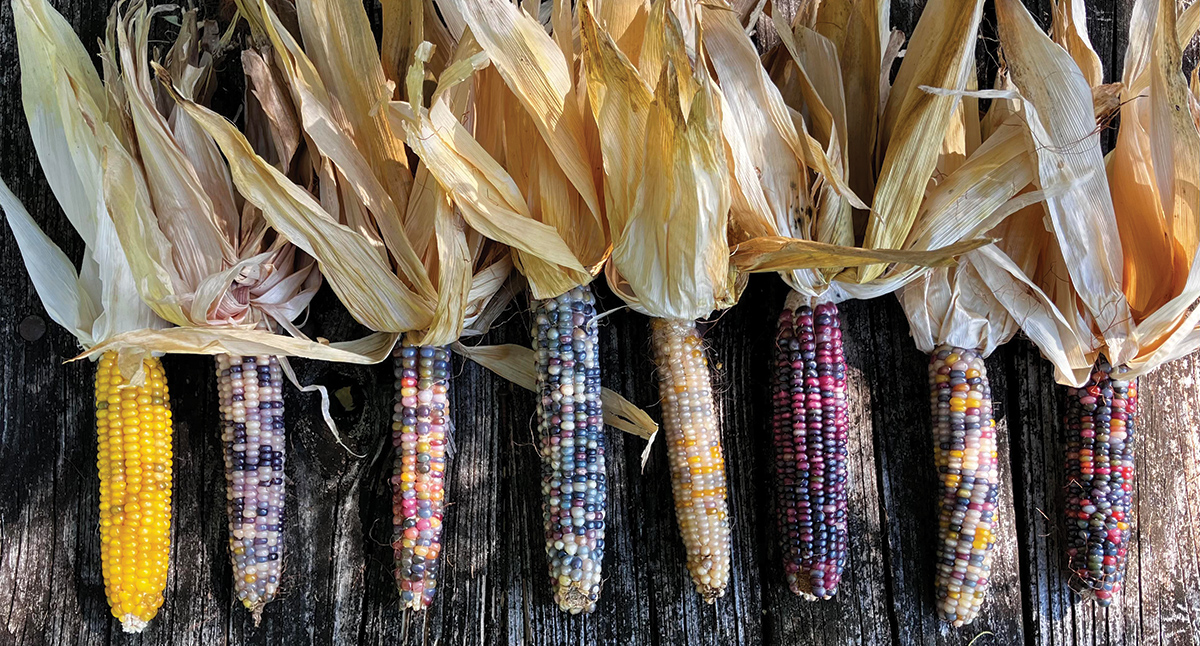
Heirloom corn, Glass Gem variety. Photo by Lyric East
By Lyric East
Southern Appalachia is considered one of the most diverse regions in the country for heirloom seeds. Local farmers and chefs often adorn their offerings with the term heirloom. For many, the word evokes general feelings of quality, timelessness and storied origins. But for others, it is a bit confusing. How do we collectively define heirloom, and why is it important?
The confusion is understandable, since the word carries various cultural, social and scientific connotations—depending on whom you are speaking with. Many dedicated seed-savers (people who collect seeds) would quantify heirloom with a time-stamp: the seed needs to have been grown and saved for at least 40 years. Others would argue poetically that any seed passed between warm hands carries the spirit of heirloom preservation and is well on its way to becoming old-timey just by way of people caring to keep it alive. It may be easier to define heirloom seeds by what they are not: true heirloom seeds come with the assurance that they have not been bred through hybridization or genetic modification, but rather, through natural pollination.

Shelling heirloom dent corn at Wild East Farm. Photo by Lyric East
Indisputably, heirloom seeds carry stories: the names of the farmers who kept them alive, the triumphs and challenges of long-passed communities or the essence of the place where the seeds grew into themselves. These stories and place-based origins translate to unique flavors within the foods themselves.
Peruse a local farmers market in the summertime and you are likely to find an assortment of heirloom tomatoes. By fall, the market tables are covered with heirloom squashes of every color. As we enter the winter season, we turn to heirloom storage crops that can keep us nourished while the gardens are resting. A prominent and enduring storage crop of the Appalachian mountains is Zea mays, commonly known as corn.
Corn’s existence in the region is believed to stretch back nearly 2,000 years, with Indigenous stewardship carrying the seeds northward from their origins in Mexico. Across many generations of seeds being shared between warm hands, dedicated growers have cultivated countless regionally adapted, unique heirloom varieties of corn.
The legacies of these seeds continue through the devotion of present-day farmers. Two Stones Farm & Mill grows small-scale heirloom corn and wheat, with fields in both Western North Carolina and eastern Tennessee. The farm tends several varieties of dent corn, also called field corn. Unlike the sweet corn many home gardeners grow alongside tomatoes, dent corn cannot be eaten fresh off the stalk. This storage corn is harvested after drying out fully on the plant, once each kernel has developed a darling little dent, or dimple, in its surface. Dent corn has long fed Appalachian farmers and communities thanks to its storability and deliciousness as a grinding grain.
The distinguished Southern staples of cornbread and grits are commonly made from ground dent corn. Historically, these dishes provided essential sources of both calories and community, particularly during the winter months when mountain people relied more earnestly on storage foods.
The versatility and reliability of corn has not gone unnoticed. With more than 90 million acres planted annually, corn is the most widely grown crop in the US. Yet, less than one percent of that land is producing heirloom corn. By purchasing heirloom foods from your local farmers, you are directly participating in the essential preservation of regionally adapted and culturally relevant seeds.
Western North Carolina, being a hotspot for diverse heirloom foods, is the perfect place to enjoy the rich, enduring flavors of heirloom corn. With three year-round farmers markets in Asheville alone, the leaner winter times are still full of abundance from local farms. Try baking a few extra pans of cornbread this winter to share with neighbors and listen for what stories are passed around the table.
Two Stones Farm & Mill is freshly stocked with curated heirloom grain gift boxes, complete with artistic recipe cards. Gift boxes and other farm offerings can be found through its online store at TwoStones.Farm. Lyric East is an artist, writer and owner of Wild East Farm. Find her photos and quarterly publications at WildEastFarm.com. Her farm-grown foods are available weekly at the RAD Farmers Market and the North Asheville Tailgate Market.
Cornbread from Red Fiddle Vittles
7 tbsp. unsalted butter
1 cup stone ground heirloom cornmeal
1 cup flour
1 tsp. salt
2 tsp. baking powder
1/4 tsp. baking soda
2 eggs
10 oz. buttermilk
2 tbsp. honey
1/4 cup hot water
Preheat oven to 425°.
Place butter in a 10-inch cast iron skillet. Transfer skillet to oven and cook until butter is melted and lightly browned, about 10 minutes.
Pour butter into a small bowl and set aside. Leave 1 tbsp. butter in the skillet.
Combine cornmeal, flour, salt, baking powder and baking soda in a large bowl. Whisk to combine.
In a separate bowl, combine eggs, buttermilk and honey. Whisking constantly, slowly add browned butter.
Add wet ingredients into dry ingredients and stir until just combined.
Stir in hot water and immediately pour batter into the skillet.
Bake for 20-25 minutes. When done, the top should be lightly browned, and a toothpick inserted into cornbread should come out clean.




Yes!! Sweet Corn is overrated!
Field Corn is so much more versatile and resilient and multi-use.