By Casey First
The Ruby-throated Hummingbird (Archilochus colubris) is one of the more than 350 species of hummingbirds in the world. However, it is the only breeding species of hummingbird in the eastern US and, thus, in western NC. What we lack in diversity of species here is made up for in the sheer beauty of what many call “flying jewels.”
Migrating up from their wintering spots, they can first be seen here in the eastern US and north through eastern Canada in mid-April. During summer months, you’ll see their iridescent colors glimmering in the sun as they zig-zag from flower to flower in search of the next sip of sweet nectar.
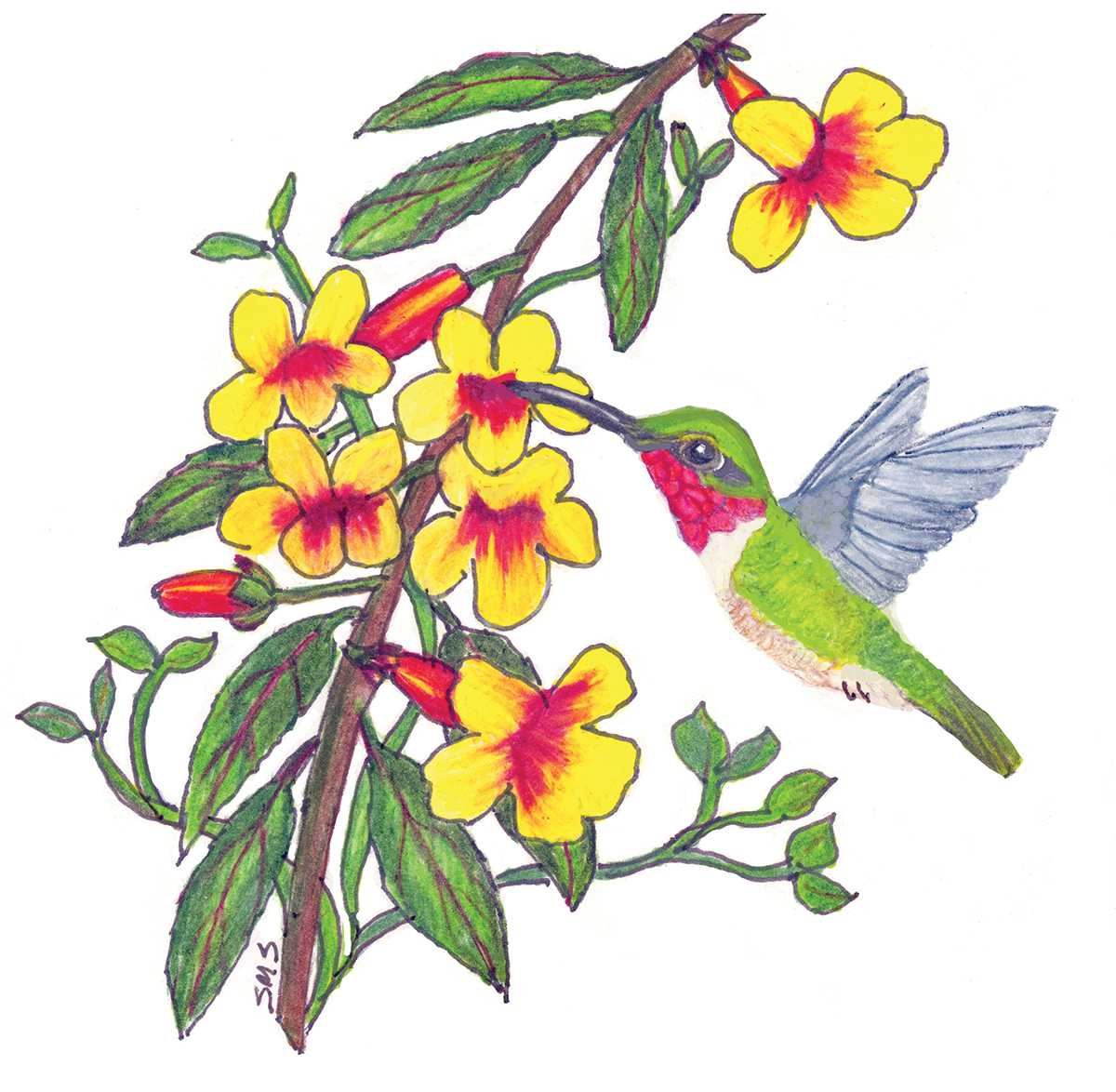
Stephanie Sipp illustrator
The male has a dazzling ruby-red gorget tucked over his white breast. His belly and tail feathers are adorned in various hues of green, leading out to darker tail feathers. His female counterpart lacks the red throat, instead having a duller white coat and breast. She does have equally stunning green accents on her back, leading down to more bluish tones on her tail feathers which have white spots at the tips. Both sexes have a slender bill that curves downward ever so slightly.
When full-grown, these birds peak in size at about 3 to 4 inches, with a similar wingspan. At maturity, these little gems weigh in at only 3 to 5 grams (about the weight of a nickel)!
What’s equally fascinating about these birds is the grace with which they can float and dance, and also their precision in stopping mid-flight, hovering in place and turning on a dime. They are the only bird species that can fly backwards. All of this as their wings beat at a rate of up to 60 times a second and their heart races at more than 1,200 beats a minute.
Over spring and summer months, you will typically see them in open gardens, grasslands, orchards and backyards. Their diet consists primarily of sugary nectar from red and orangish tubular flowers like trumpet creeper, wild columbine, honeysuckle, jewelweed or bee-balm varieties. They also eat small insects like mosquitoes and gnats, and they regularly consume twice their body weight in a day.
To bring them into your green space, put out a hummingbird feeder with a simple 4/1 ratio of water to plain table sugar. Avoid harmful red dyes and change the nectar frequently to prevent fermentation. To deter bees at the feeder, keep nectar levels low. Hummingbirds have disproportionally long tongues that can lap up sweetness in even the deepest crevices.
Don’t count on seeing too many at your feeder at once because male Ruby-throats are extremely territorial and can even get aggressive fending off their sweet treat. Consider yourself lucky if you see a Ruby-throated Hummingbird’s nest. Most are built higher than 10 feet. Measuring at only about 2 inches across, these delicate nests are home to eggs that weigh about 1/100th of an ounce and are no bigger than a jellybean!
In late September, Ruby-throated Hummingbirds make the long flight back to wintering grounds in Central and South America, flying up to 500 miles or more non-stop over the ocean waters. What’s even more impressive is that a bird with a brain that is about the size of a BB can instinctively remember the exact flower or feeder in your backyard when they return the following April. So be on the lookout for these majestic hummers in your yard this summer, and remember to appreciate all that is packed into such a miraculous little bird!
Casey First is owner of North Asheville Wild Birds Unlimited, located at 946 Merrimon Avenue, Suite 120. Monthly bird events are free and open to the public. To learn more, visit NorthAsheville.wbu.com. Stephanie Sipp is a professional nature illustrator and educator who creates joyful images of animals, birds, flowers and places.