River cleanup
By Emma Castleberry
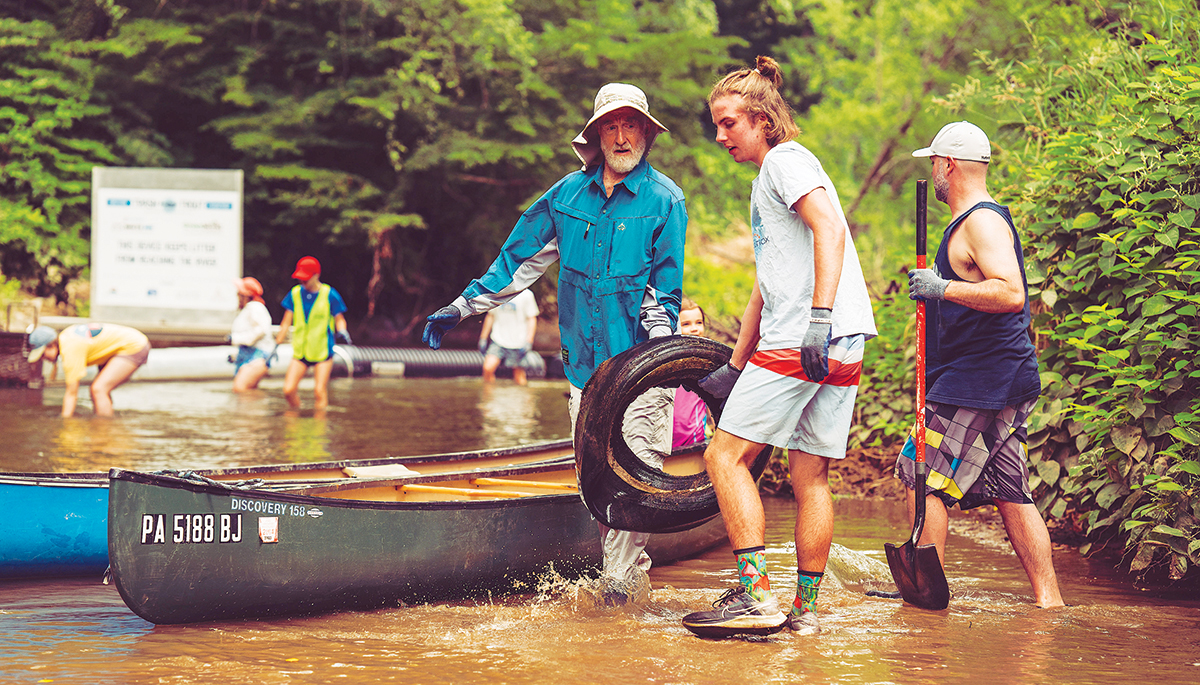
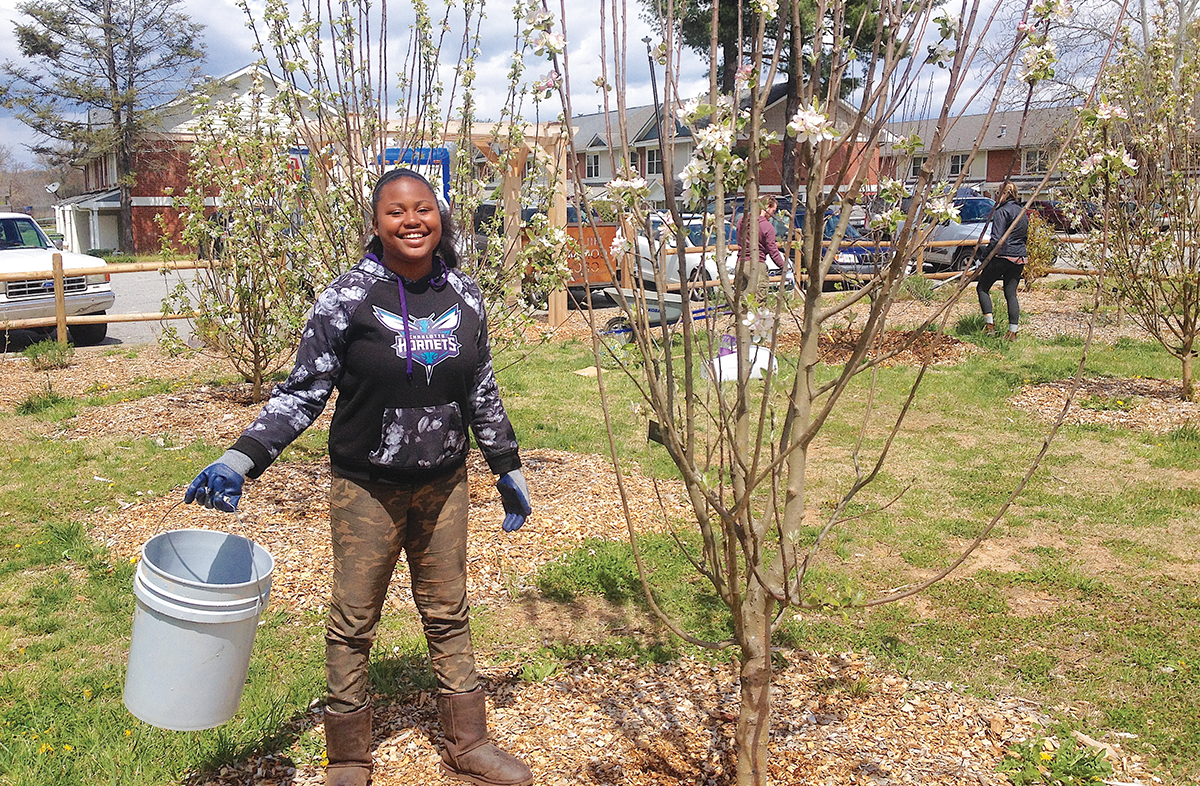
Asheville GreenWorks will celebrate its 50th anniversary on Monday, April 17. The organization’s legacy can be seen all over Asheville, in a cleaner French Broad River, tens of thousands of urban trees and more than 40 parks and playgrounds. But, perhaps more significantly, Asheville GreenWorks has increased public awareness about our region’s precious natural resources, centering environmental appreciation as a foremost community value.
Asheville GreenWorks was founded in 1973 as a community-wide revitalization initiative called Quality ‘76. “It was a group of residents—community and elected leaders, business owners and ordinary citizens—who volunteered their time, creativity and elbow grease to the common cause of improving the quality of life for Asheville’s residents ahead of the nation’s bicentennial,” says GreenWorks executive director Dawn Chávez. Quality ‘76 tackled litter and pollution; invested in the revitalization of Pack Square and Pritchard Park and the construction of Pack Memorial Library; cleaned streets and waterways; planted trees and gardens; and hosted concerts and programs to unite the community in action for the local environment.
Tree planting at Hillcrest
After the bicentennial, the organization was renamed Quality Forward and became affiliated with the Keep America Beautiful organization. Quality Forward played a critical role in launching cultural events like Bele Chere, a large outdoor music and arts festival in downtown, and the “Sundays in the Park” concert series and in bringing recycling services to the area.
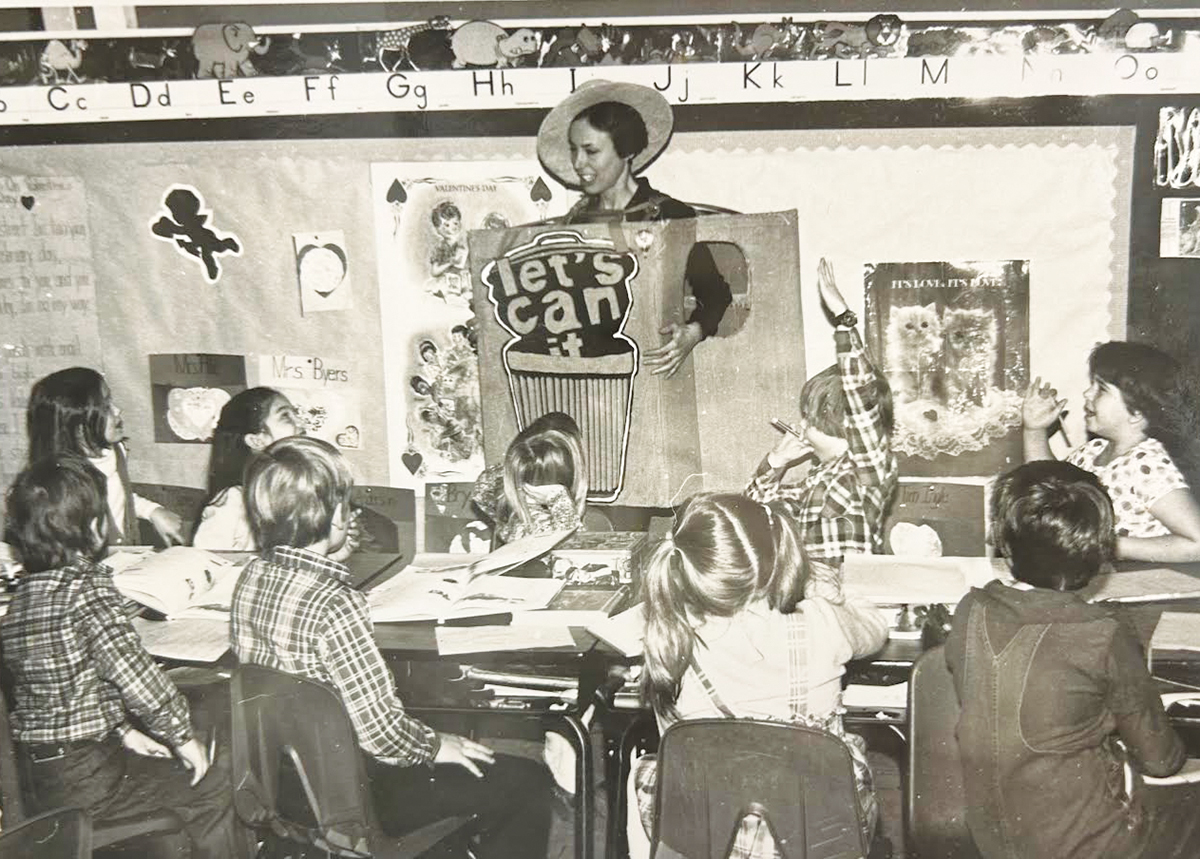
Bess Baird joined Quality Forward initially as a volunteer on the Schools Committee and then became coordinator of the schools program. In this role, she developed classroom materials like the Project Pride curriculum, incentives and rewards for participation, school competitions and contests, and Caty Cleanup, a character that visited classrooms to engage and inspire students. Many Asheville natives likely have memories of school visits from Caty Cleanup, who educated local students about litter for decades. “I still have former kindergartners who were part of Project Pride approach me in various places, like Ingles, and tell me they would never throw any trash down and they recycle,” says Baird.
In the late 1990s, Katie Breckheimer worked for Quality Forward leading the areas of River Improvement, Pedestrian Coordination, Recycling and Environmental Education. She also took on the identity of Caty Cleanup. “I had always favored recycling as a way to teach about natural resources,” she says. “Strolling into a classroom with a brand new bicycle made from recycled materials really got their attention. My program was called Caty Cleanup Cycles Back, and I talked to the children about what the bike parts were made from.”
Bess Baird as Caty Cleanup
While Asheville GreenWorks’ early history served to inspire and educate multiple generations of eco-minded citizens, the modern organization has adapted to address different, and arguably more urgent, issues. “During the first 35 years of the organization’s history, Asheville’s most pressing environmental needs were polluted waterways, litter and illegal dumping,” says Chávez. “While those issues continue to plague Asheville today, new challenges, such as responding to the impacts of a changing climate, have shifted our attention in new directions.”
Presently, GreenWorks’ long-term vision includes four core impacts: Community-Scale Climate Resilience, Empowered Communities, Systems Change and a Healthy Environment. Key programs and projects in these areas include restoring the urban tree canopy, preserving native pollinators and reducing air and water pollution.
While GreenWorks’ overarching mission may have evolved, education remains a central tenet of the nonprofit’s work. “Our work has always been to be in conversation with Asheville’s communities,” says Chávez. “GreenWorks is celebrating 50 years because the organization has remained relevant to the changing needs of the environment and the community over time. We have invested in building trust and meaningful relationships, followed through on commitments and demonstrated to communities that we are with them for the long haul.”
To learn more, donate or volunteer, visit AshevilleGreenWorks.org.