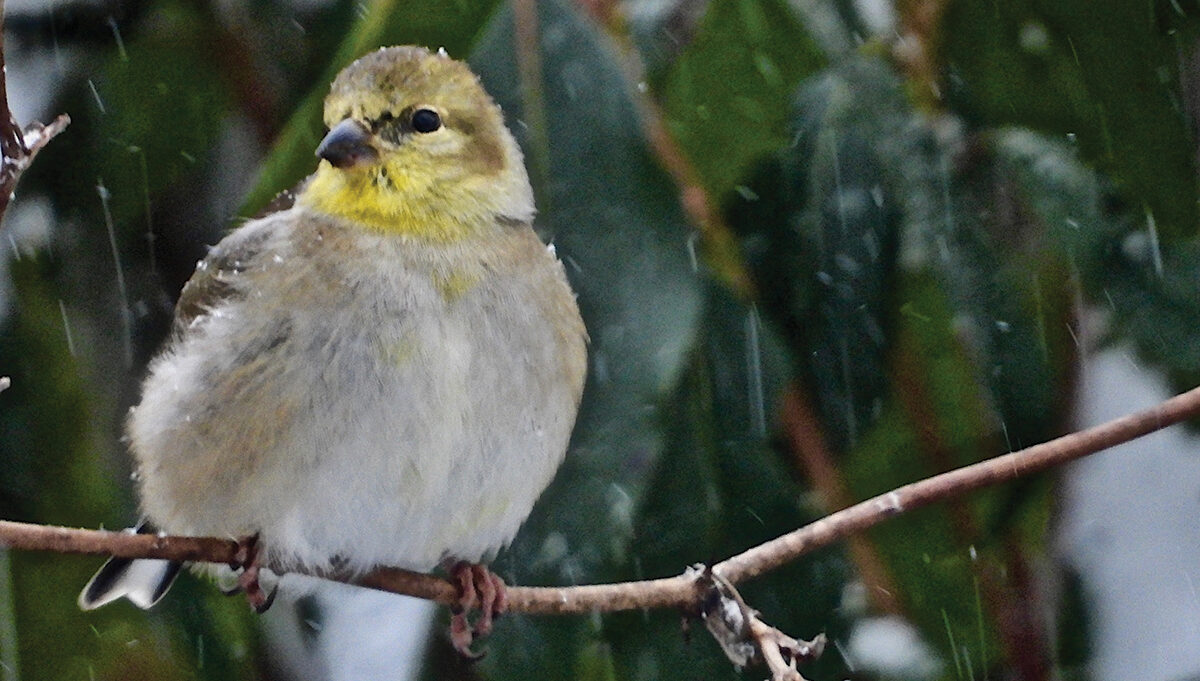
American Goldfinch in Black Mountain. Photo by Jonathan Marchal
By Emma Castleberry
The month of February is devoted to birds at the NC Arboretum, with a calendar of events and educational programs dedicated to our feathered friends. While some notable birds, including warblers, seed-eating songbirds and many birds of prey, are absent during this winter month, it is also a time when birds are most accessible to people. “In winter, birds can be viewed at bird feeders very easily, and it is likely you’ll find them in greater abundance in the winter months,” says Jonathan Marchal, director of education at the NC Arboretum. “At the same time, we find many ducks and other waterfowl that would not otherwise be found in our region. A trip to places like Lake Julian or Owen Park may yield some exciting bird sightings such as loons, mergansers, grebes and other waterbirds.”
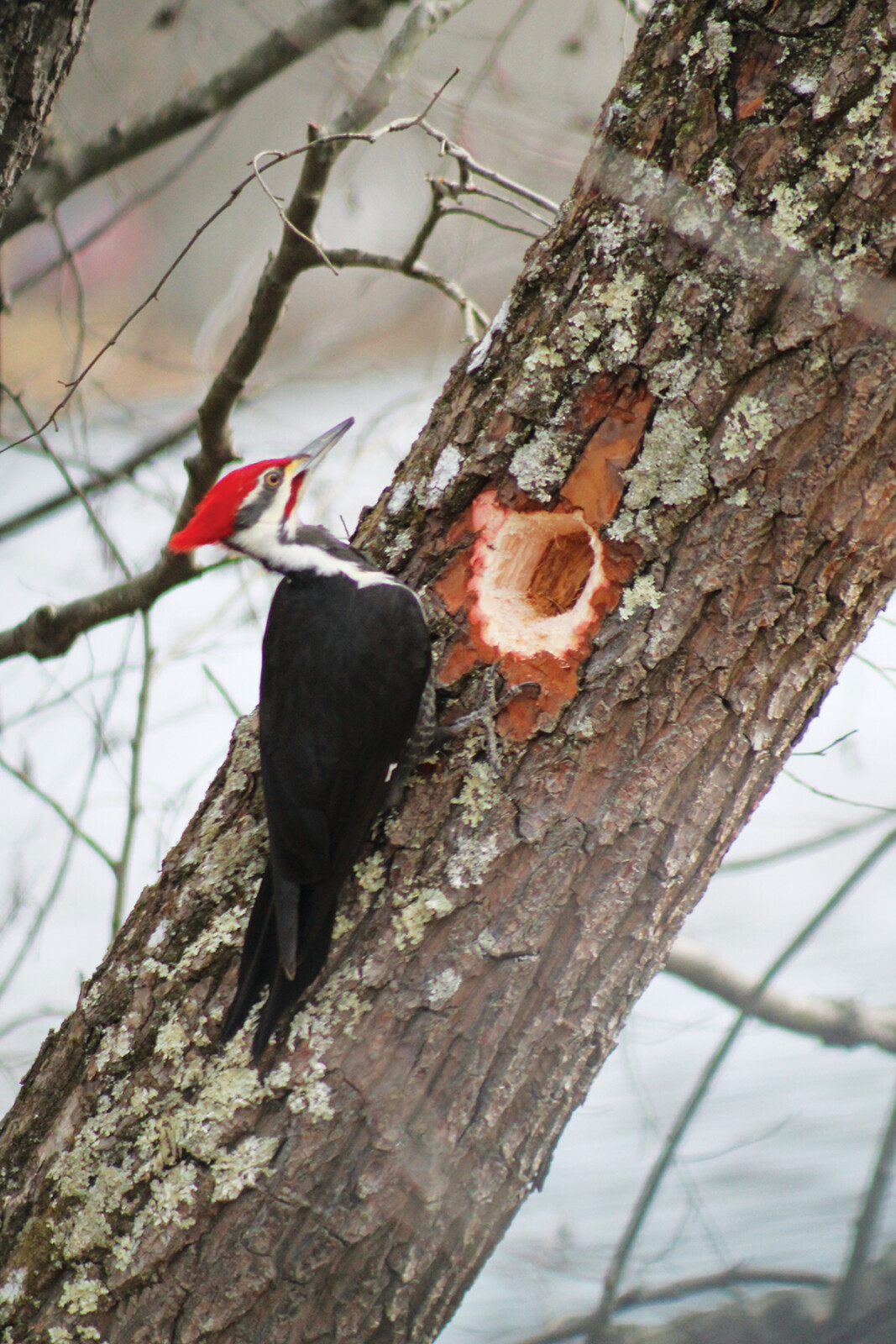
Pileated Woodpecker at Biltmore Estate. Photo by Jonathan Marchal
The Arboretum’s Adult and Continuing Education programs offer a number of bird-focused learning opportunities both in person and online, including “Basic Birding” classes led by experts, bird walks, a workshop on building your own bluebird box and lessons about bird-friendly garden planting. There will also be a discussion of Survival by Degrees, the National Audubon Society’s recent report on 389 species of birds impacted by climate change. Another special program, “Birds in Music, Literature and Fine Art,” will be held in connection with the Arboretum’s current exhibition An Abundance of Riches. Colorful birds feature prominently in this display of vibrant ukiyo-e style prints by artist Andrea Rich.
“The mission of the Arboretum is to creatively connect people to plants and places,” says Marchal. “Birds and plants are incredibly interconnected. Trees and other plants provide sources of food and shelter for birds, as well as for the insects and other small animals that birds eat. In turn, many birds disperse the seeds of plants and hummingbirds serve as important pollinators. We feel it is important not only to serve as a vital habitat for birds but also to educate the public about them.”
The Arboretum is also a participant in The Great Backyard Bird Count, which takes place from Friday, February 17, to Tuesday, February 21. This world-wide effort is put on jointly by the Cornell Lab of Ornithology, National Audubon Society and Birds Canada and has been taking place for 25 years. The Arboretum will celebrate The Great Backyard Bird Count on Saturday, February 18, from 10 a.m. to 2 p.m. with birding walks and a bird mist netting demonstration. There will also be a bird craft station for children in the Education Center lobby.
Not only does the Great Backyard Bird Count help scientists better understand global bird populations, but it also has personal benefits for the birdwatcher.
“Observing birds has been proven to reduce feelings of stress and anxiety,” says Marchal. “In fact, spending time birding outdoors or doing anything else in nature has been proven to lower risks of cardiovascular disease, diabetes, obesity and asthma. We also benefit from enjoying a greater connection to the natural world around us, which can prove to be a lifelong learning endeavor.”
Anyone can participate in the Great Backyard Bird count by setting up a free account at ebird.org. Participants can also find in-person or virtual instructional courses on how to observe, record and upload their bird photos at ScienceAcrossNC.org. Learn more about the Arboretum’s February birding events at NCArboretum.org.