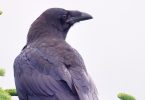
Wildlife specialists introduce visitors to a wide variety of raptors. Photo courtesy of the Carolina Raptor Center
By Paula Musto
Looking for a summertime adventure not too far from home? Consider a trip to the Carolina Raptor Center, located outside Charlotte, where visitors can meet some the most fascinating and vital creatures on our planet.
Raptors including eagles, hawks, falcons, owls and vultures reside on the heavily wooded 57-acre campus. These birds not only astonish with their beauty and aerial maneuvers but also play an important role in maintaining healthy ecosystems.
“It’s our mission to ignite a passion for these amazing animals,” says Rachel Dupree, director of external relations at Carolina Raptor Center, both a zoological/nature center and a rescue and avian rehabilitation facility. “Once you learn about raptors and connect with the various species, you cannot help but have a greater appreciation for the natural world and conservation.”
Known for keen eyesight, hooked beaks, powerful talons and extraordinary hunting abilities, raptors have existed on our planet for more than 50 million years. The meat-eating birds are predators who hunt relentlessly for prey, including small mammals, birds, fish and insects. Some species, such as vultures, specialize in feeding on dead animals.
Western North Carolina’s terrain is especially hospitable to raptor populations. The Southern Appalachians create strong updrafts and thermal currents ideal for soaring birds, and our extensive forests and protected lands provide habitats suitable for nesting sites and hunting.
Along the Blue Ridge Parkway, even casual observers will often see wild raptors, but may wonder: Is it an eagle or hawk, a falcon or vulture? One of the best ways to become familiar with the various birds, Dupree says, is to take a stroll along the Center’s Raptor Trail where 30 raptors reside. The walk is just shy of a mile and offers an opportunity to view and learn about species native to our region and exotics from Africa, Asia and South America.
Here are some of the critters you will meet.
Bald Eagles — These regal birds aren’t really bald, but their white-feathered heads gleam in contrast to their chocolate-brown body and wings. They serenely hold court, reminding visitors of their status as a national emblem (despite Ben Franklin’s objections) and a symbol of freedom and democracy. A Golden Eagle resides nearby. This species, even more powerful than its bald cousins, is known to snag prey larger than itself, including an occasional goat or deer.
Red-tailed Hawk — Easy to spot with telltale rust-colored feathers, this striking bird is frequently found in our region perching on telephone poles and soaring over open fields in search of food. Hawks are widespread in our region and, each fall, thousands migrate south over the Blue Ridge Mountains.
Great Horned Owl — This fierce-looking bird, known for its piercing yellow eyes and bone-crushing grip, is one of nature’s most formidable predators. Thanks to powerful talons, this owl, like many eagles, can take down surprisingly large prey weighing as much or even more than itself. Owls also have extraordinary hearing, enabling them to detect rustling from prey more than 100 feet away.
Red-legged Seriema — This large terrestrial bird is famous for its dramatic thrashing behavior when handling prey and is one of the stars of the Center’s wildlife shows. The animal furiously shakes, whips, slams and beats a captive furiously against the ground until the prey is incapacitated. The bird is also extremely vocal. An ear-piercing kuap-kuap-kuap-kuap, delivered daylong, has been likened to a deafening automobile alarm.
Andean Condor — One of the largest flying birds in the world, this condor belongs to the vulture family. Sometimes referred to as nature’s clean-up crew, vultures play an important environmental role as scavengers who feed on dead animals, disposing of the carcasses and reducing the spread of bacteria.
Peregrine Falcon — This species is the fastest bird on earth, reaching speeds of up to 240 mph during hunting maneuvers when they strike their prey midair. Thanks to conservation efforts, these remarkable hunters, once extinct in WNC, have made a comeback.
This is just a sampling of the avian ambassadors along the Raptor Trail. There are also scores of other unseen raptors—injured, ill or orphaned birds—cared for at the nearby raptor hospital. The medical facility (not open to the public) cares for hundreds of rescued animals each year with the goal of releasing rehabbed birds. Some, unable to survive on their own in the wild, remain at the Center as permanent residents and, if comfortable with human interaction, serve as the trail’s avian ambassadors.
“Every bird you see plays an important educational role,” Dupree says. “By providing awe-inspiring experiences, our avian ambassadors encourage guests to become better stewards of the natural world.”
Unfortunately, many raptor species face threats from habitat loss, pesticide poisoning and human disturbances including vehicle collisions, the most frequent cause for raptor injuries and death. Their decline comes at a high cost to humans. Raptors are important contributors to the food chain and are indicators of healthy ecosystems, making them indispensable to our wellbeing.
Paula Musto is a writer and volunteer for Appalachian Wildlife Refuge. Learn more at CarolinaRaptorCenter.org.