By Elaine Smyth
It may seem surprising that prickly pear cactus (Opuntia humifusa) is native to North Carolina, far from the hot, sandy deserts with which we commonly associate it. In fact, it is found in the wild throughout the southeastern US and is so cold-hardy that it grows as far north as Michigan and Massachusetts! Although rare here in Western North Carolina, it is found on rocky, exposed outcrops in the Southern Appalachians.
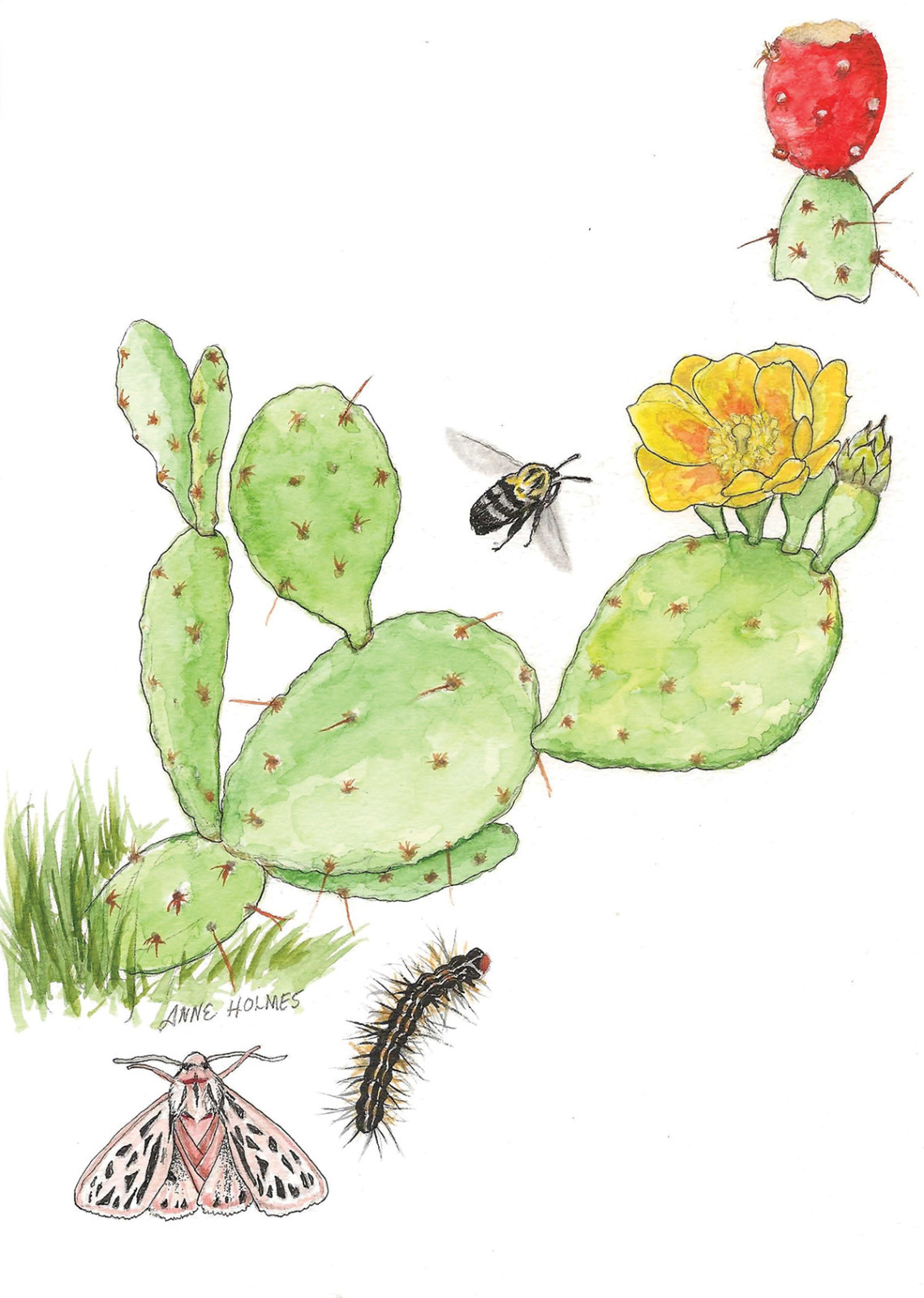
Anne Holmes, artist
Prickly pears usually flower in June, producing lush, multi-petaled yellow flowers two to three inches across. Each individual flower lasts only a day or two, but mature plants produce many buds in quick succession, blooming from late May through early July. The showy blossoms attract many pollinators and are a favorite with bumble bees. When pollinated, they grow into large reddish fruits—the pears, also known as “tuna” in Spanish—providing food for wildlife and sometimes for humans.
The spiny Opuntia cactus pads, which are actually modified stems, are also used by humans for fuel, food and animal feed. During the winter, the pads will lie down flat against the ground, but as temperatures rise in the spring, so will the cactus pads, standing up straight and putting out new growth.
The prickly pear cactus has few insect pests or diseases, though soggy soils will cause root rot. Cochineal insects, from which the famous red cochineal dye is made, sometimes live on the prickly pear, feeding on its pads, but seldom cause much damage. Prickly pear is also a host plant for the caterpillars of the striking Arge Tiger Moth (Apantesis arge).
Worldwide, the genus Opuntia includes 145 species that occur naturally in North and South America. Many of these species are deeply important to the Indigenous peoples of the Americas, for whom they have both utilitarian and symbolic significance. Wherever it grows, the prickly pear represents resilience, tenacity and adaptability. Producing beautiful blossoms and fruits in the harshest conditions, it serves as a symbol of hope in times of adversity.
Upcoming Events at Asheville Botanical Garden
Learn more and register for classes online via the ABG website at AshevilleBotanicalGarden.org.
Tuesday, June 2: No Time to Despair: How You Can Mobilize to Protect Pollinators from Pesticides as a Gardener, Neighbor, and Citizen, with Sharon Selvaggio
Saturday, June 6: The Southeast Bumble Bee Atlas: Intro & Volunteer Training, with Bryan Tompkins
Saturday, June 13: Native Groundcovers for Function and Beauty, with Emily Driskill
Sunday, June 14: C.P.A. Series – Pollinator Safari, with Florrie Funk (repeated Monday, June 15)
Saturday, June 20: Crevice Gardens, Rock Gardens, and Xeric Plants, with Ben Pick
The ABG Visitor Center and Gift Shop are open 10 a.m. to 4 p.m. daily, featuring local products, garden-themed art, toys, tools, cards and books. Asheville Botanical Garden, 151 W.T. Weaver Boulevard, is an independent nonprofit public garden showcasing 750+ species of native plants. Our mission is to promote and showcase the value and diversity of plants native to the Southern Appalachian region by serving as an educational resource and urban destination for nature study and enjoyment. Supported by members, donors and volunteers since 1960, the Garden is free to all. Open daily sunrise to sunset, year-round.