By Elaine Smyth
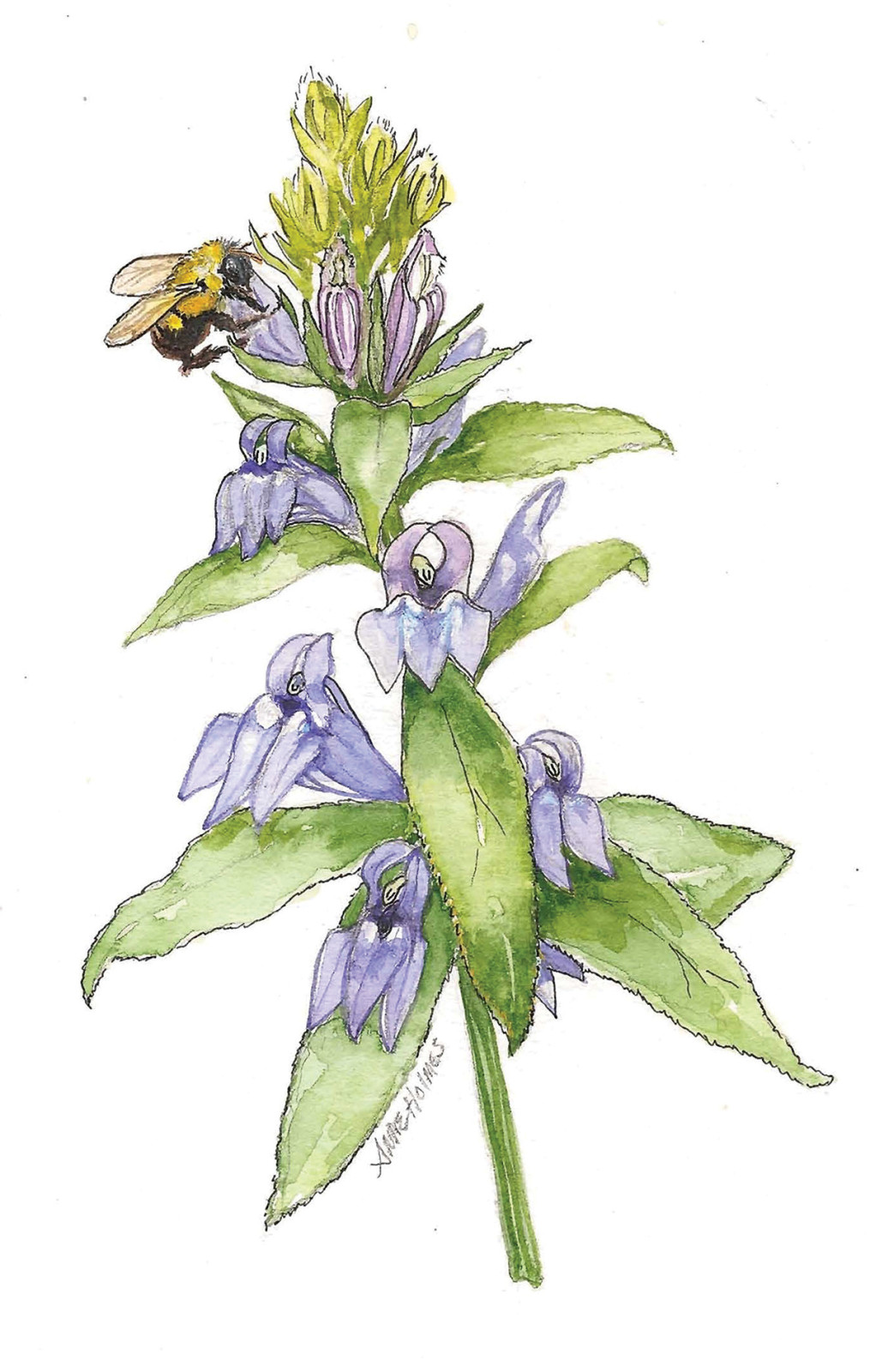
Anne Holmes, artist
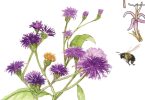
The great blue lobelia (Lobelia siphilitica) comes into its own in autumn. With striking flower stalks up to four feet tall, its handsome blue flowers make an eye-catching addition to the bright yellows that are everywhere in the fall garden. It’s especially beautiful when grown with its fire-engine red cousin, the cardinal flower (Lobelia cardinalis). Although the great blue lobelia is a short-lived perennial, it will self-sow if given an opportunity, so it’s easy to keep in the garden. Even better, it’s not terribly picky about where it grows. It will thrive in conditions ranging from part shade to full sun, if given plenty of moisture and a loamy soil. In addition to cardinal flower, plant it with white wood aster, turtlehead, Joe Pye weed and autumn goldenrod. All do well in similar conditions, and they’ll produce a memorable display together in early fall.
Great blue lobelia is a favorite with pollinators, attracting hummingbirds and a variety of bees, especially those with long tongues. A tidbit for naturalists: like many plants that are adapted to attract hummers, it has no scent. It does have a milky white sap, however, which contains lobeline, an alkaloid that is toxic to humans. Despite its toxicity, Native Americans have found medicinal uses for it. The Cherokee have used various preparations to treat everything from lung ailments to skin wounds, and the Meskwaki used it as a medicine to end quarrels. Perhaps we should all grow more lobelia!
Upcoming Events at Asheville Botanical Garden (ABG)
Learn more about ABG events and register online via the ABG website at AshevilleBotanicalGarden.org.
Plants Make the Garden, with Amy Fahmy
Sunday, September 7, 2–4 p.m.
Unlock the secrets to a show-stopping garden. Learn to choose the right plants, place them like a pro and create breathtaking visual effects in your outdoor space. Amy Fahmy is a licensed landscape architect who has gardened for Plant Delights Nursery, Richmond Hill Inn and The Biltmore Estate. She is currently transforming her own garden to include more native plants for pollinators.
Pollinator-Friendly Pest Management, with Brannen Basham
Tuesday, September 9, 6–7:30 p.m.
Learn how to control pests without killing desirable pollinators. Part of the Certified Pollinator Advocate program co-sponsored with Bee City USA-Asheville.
Asheville Botanical Garden Fall Plant Sale
Friday, September 13, 9 a.m. to 3 p.m.
Buy local and buy native! This great plant sale features local growers as well as plants grown at the Garden. Fall is the best time to plant!
Asheville Botanical Garden, located at 151 W.T. Weaver Boulevard, is an independent non-profit garden supported by its members, donors and volunteers. Our mission is to promote and showcase the value and diversity of plants native to the Southern Appalachian region by serving as an educational resource and urban destination for nature study and enjoyment. The Garden features more than 750 species of native plants in a 10-acre naturalistic setting. Garden hours: sunup to sundown. Visitor Center hours: 10 a.m. to 4 p.m. Free admission. Please donate or join to support the Garden. Members get a 10 percent discount in the gift shop and 25 percent off classes. Learn more at AshevilleBotanicalGarden.org.