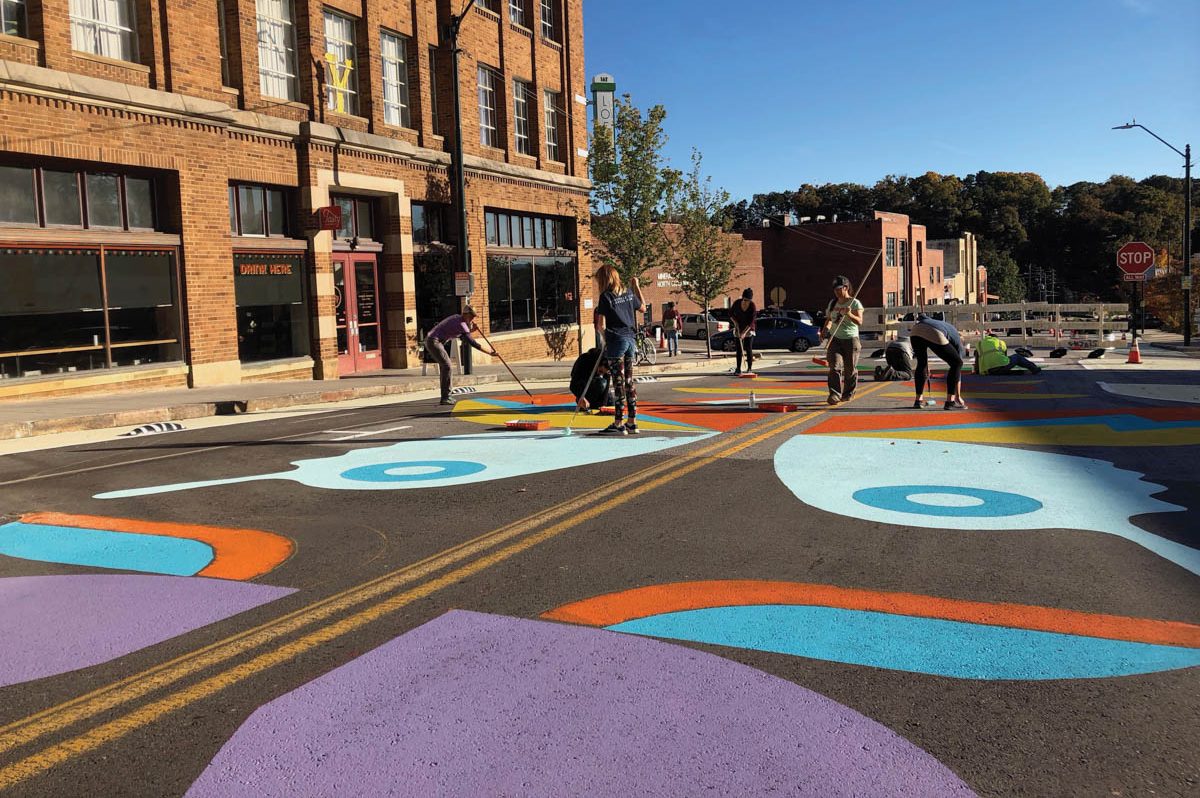
Street Tweaks Butterfly Build. Photo by Justin Mitchell
Local nonprofit Asheville on Bikes (AOB) has released a map outlining a “slow streets network” of connected biking and walking paths that will allow for safer, socially distanced movement about the city. The proposed map, called The Circulator, reappropriates public spaces like parking spots to create pedestrian-friendly commerce zones. Many of the current walking paths in Asheville do not allow for proper six-foot social distancing. “Establishing the slow streets network is an important response to pandemic restrictions,” says Mike Sule, executive director of AOB. “Parks are closed, swimming pools are closed, programs are cancelled, but neighborhood streets are open. Therefore, we should provide more space for people to enjoy their streets at safe physical distances.”
With approval from the City of Asheville and North Carolina Department of Transportation Division 13, the slow streets network could be established quickly. Unfortunately, Sule says, the Department of Transportation has not responded at all to the release of The Circulator map, and the City’s response has been lagging. “Our transportation agencies have been reluctant to respond to the need,” says Sule. “The non-response of city and state officials is a form of objection.”
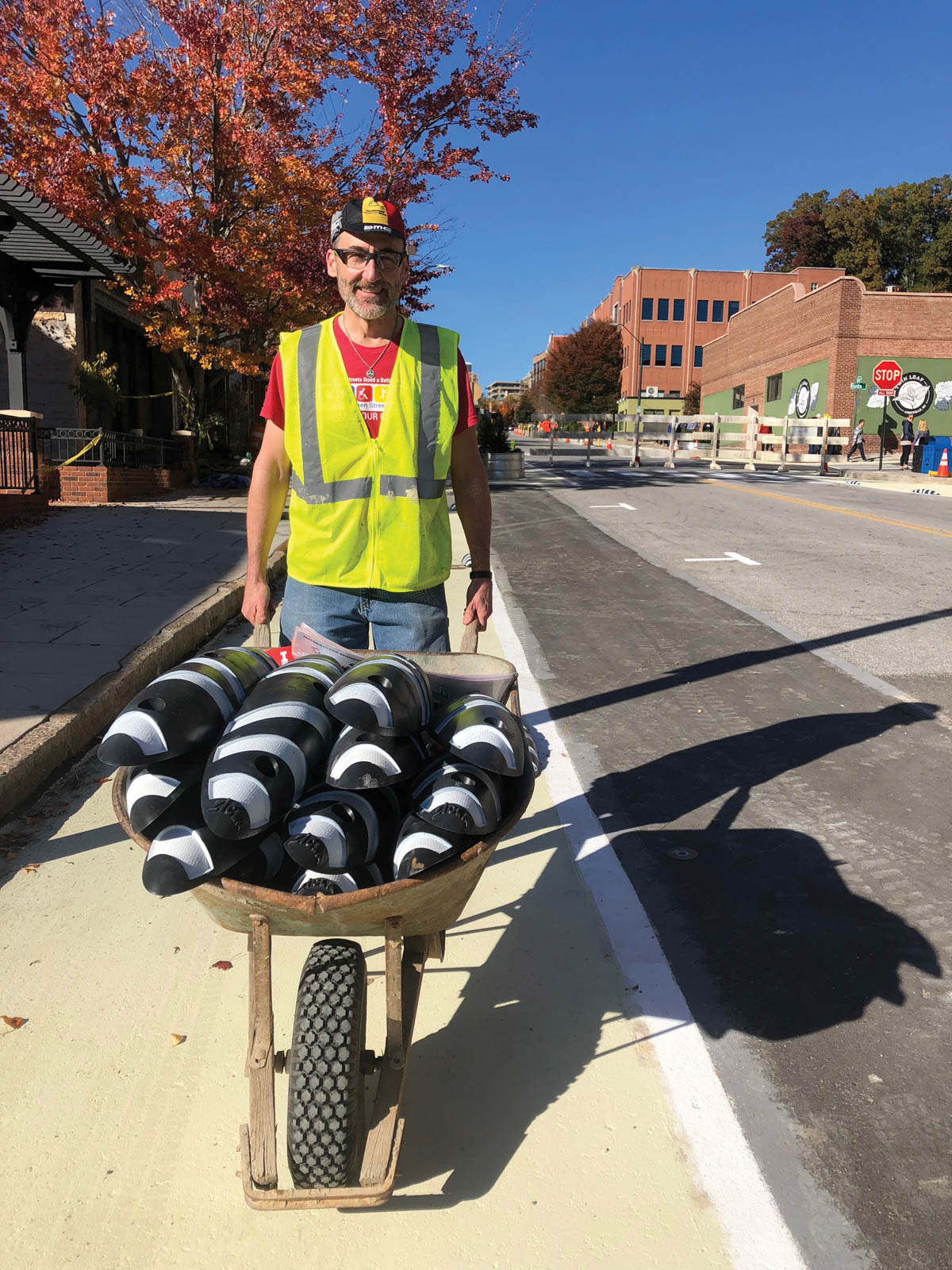
Street Tweaks Tony. Photo by Mike Sule
Michael Stratton, current chair of the Multi-Modal Transportation Commission (MMTC) and an advocate of the slow streets approach, says this is par for the course. “Our ‘progressive’ city has abdicated its duty to provide alternatives to travel by car and has become the most dangerous city to bike or walk in the state,” he says. “Throughout the course of lockdown and through phased reopening, a record number of Asheville citizens are pulling out their old bikes or buying new ones. Even more folks are utilizing our narrow and incomplete network of sidewalks with little room to avoid other pedestrians or cars. As we move through a world that requires more space to physically distance, government should do everything in its power to find the space to safely do so.”
Members of the MMTC and AOB brought the idea of Safe Commerce Zones and Pedestrian Prioritized Zones to the City and spent months lobbying directly with the mayor, members of council and staff to have them implemented. Stratton credits the City for the recent installation of some of these zones, but feels the project “is still incomplete without safe bike and pedestrian corridors linking them to each other and surrounding neighborhoods,” he says.
Once approved, appropriate next steps would be for the City to create and publish a guidance manual for how neighborhoods can calm their streets. “The guidance would include signage, allowable traffic calming materials and required travel widths,” says Sule. “The City would then designate a day that traffic calming rules go into effect and residents on each street would implement traffic calming changes. A slow streets approach would need to be community driven, but supported by the City.”
AOB is inviting community members to sign a pledge supporting The Circulator to encourage public officials to take action. These changes will have a lasting impact for the city beyond meeting the current social-distancing requirements. “As we make our way out of the pandemic,” says Stratton, “we’ll be left with a more walkable, bikeable city. If we ever want to diversify Asheville’s economy and attract higher paying jobs, these are the types of progressive characteristics we’ll need to invest in.”
Learn more about The Circulator and sign the pledge at AshevilleOnBikes.com.